
Partnership includes integration with Tickets.com and Major League Baseball Advanced Media
Leading dynamic pricing provider, Digonex Technologies, Inc., announced that the Minnesota Twins will be utilizing their dynamic pricing services via a partnership with Tickets.com and Major League Baseball Advanced Media (MLBAM) to price single games tickets in select sections this season. The Twins will utilize the Digonex Sports and Entertainment Analytical Ticketing System (SEATS™), a robust and proven dynamic pricing system for event ticketing that scientifically changes prices based upon econometric and behavioral principles.
The SEATS integration with Tickets.com and MLBAM allows MLB teams, as well as other Tickets.com clients, to quickly analyze pertinent information and adjust ticket prices. With SEATS, the Twins now have a demand-based pricing system in place enabling them to deliver the same great fan experience at just the right price.
“We are confident that SEATS will help us identify the best price for our tickets allowing us to give Twins fans the best value for their dollar at Target Field,” said Steve Smith, VP of Ticket Sales and Service for the Twins. “Fielding a solid team and pricing appropriately are key components to ensuring that our fans get the most out of every ticket.”
“Digonex is excited to team up with Tickets.com and MLBAM to provide the extensive capabilities of SEATS to the Twins and other MLB teams,” said Jan Eglen, Ph.D., CEO of Digonex Technologies. “Our patented dynamic pricing services are proven to increase revenues for our clients in excess of 20%. Along with our expanding analytic offerings, Tickets.com can now offer their clients our patented and proven SEATS service as a method for delivering the best value to their fans.”
The integration of SEATS, along with the advanced features of Tickets.com’s ProVenue platform, will allow the Twins to automate the acceptance of price recommendations from Digonex and eliminate the need for time-consuming manual price updates.
“We are happy to work with Digonex to provide our clients with true fan-driven dynamic pricing capability,” said John Rizzi, SVP of Product Management and Strategy for Tickets.com. “The SEATS platform has provided us with another time-saving, technologically advanced solution for our clients.”
Showing posts with label dynamic ticketing. Show all posts
Showing posts with label dynamic ticketing. Show all posts
Tuesday, April 12, 2011
Thursday, August 26, 2010
Digonex® Partners with Minnesota Twins For Ticket Revenue Analytics Services
Digonex Technologies, Inc., announced today that the Minnesota Twins will make use of its Sports and Entertainment Analytic Ticketing System (SEATS) for revenue analytic services this season.
Digonex's service is based upon econometric and behavioral principles, employs XML Team and a client customizable approach to give the most robust and flexible solution for analyzing the parameters most relevant to delivering valuable recommendations to the client.
"Sports franchises are facing many challenges including a tough economy, a very accessible secondary market, and competing forces for the entertainment dollar," said Jan Eglen, Ph.D, CEO for Digonex. "The main goal of our services is to provide our clients with greater information on the value of their fans, their tickets, and the opportunities for sustainable growth."
"As the Twins organization continues to adjust to our new home in Target Field, we remain committed to doing all that we can to field a competitive team and to delivering the best ballpark entertainment experience for our fans - now and in the years to come. Certainly, ensuring that we price our tickets appropriately is a key component to delivering on these commitments. The expertise and services Digonex provides have proven to be extremely valuable to their clients throughout the sports and entertainment industry and we hope to benefit from their analytic services as well," said Steve Smith, vice president of ticket sales and service for the Minnesota Twins.
Digonex is collaborating with Tickets.com, and Major League Baseball® to provide its analytics services to the Twins. The Twins utilize Tickets.com's flagship platform, ProVenue®, for ticket sales and inventory management.
Source: Forbes.com, August 26, 2010
Digonex's service is based upon econometric and behavioral principles, employs XML Team and a client customizable approach to give the most robust and flexible solution for analyzing the parameters most relevant to delivering valuable recommendations to the client.
"Sports franchises are facing many challenges including a tough economy, a very accessible secondary market, and competing forces for the entertainment dollar," said Jan Eglen, Ph.D, CEO for Digonex. "The main goal of our services is to provide our clients with greater information on the value of their fans, their tickets, and the opportunities for sustainable growth."
"As the Twins organization continues to adjust to our new home in Target Field, we remain committed to doing all that we can to field a competitive team and to delivering the best ballpark entertainment experience for our fans - now and in the years to come. Certainly, ensuring that we price our tickets appropriately is a key component to delivering on these commitments. The expertise and services Digonex provides have proven to be extremely valuable to their clients throughout the sports and entertainment industry and we hope to benefit from their analytic services as well," said Steve Smith, vice president of ticket sales and service for the Minnesota Twins.
Digonex is collaborating with Tickets.com, and Major League Baseball® to provide its analytics services to the Twins. The Twins utilize Tickets.com's flagship platform, ProVenue®, for ticket sales and inventory management.
Source: Forbes.com, August 26, 2010


Monday, August 16, 2010
Atlanta Hawks, Atlanta Thrashers, Houston Rockets and Utah Jazz Select Qcue to Power Dynamic Ticket Pricing
Qcue, the dynamic pricing engine for live entertainment events, today announced deals with National Basketball Association (NBA) franchises, the Atlanta Hawks, Houston Rockets and Utah Jazz as well as the Atlanta Thrashers of the National Hockey League (NHL). Already the chosen dynamic pricing solution for teams in MLB and the NHL, the Hawks, Rockets and Jazz mark Qcue's entry into the NBA.
As the only fully integrated software-based dynamic pricing solution on the market, Qcue reduces the time it takes to re-price tickets from several days to just a few minutes. Sophisticated algorithms take into account playoff implications, weather, opponents, day of the week, real-time sales and other market conditions to determine the optimal price for each ticket once a price adjustment is determined.
"We believe that Qcue's dynamic pricing system offers a versatile solution that is easy to use and flexible enough to meet the needs of both our NBA and NHL franchises," said Tracy White, Chief Sales Officer and Senior Vice President, Sales and Marketing for the Atlanta Hawks and Atlanta Thrashers. "Sports market conditions are constantly changing and now we are able to quickly adapt to them while also providing greater value to our season ticket holders."
"Qcue's technology will ultimately allow our fans and consumer demand patterns to dictate single-game ticket prices," said Christopher Dacey, Vice President at the Houston Rockets.
With Qcue's dynamic pricing system, thousands of price changes take just a few minutes. The SaaS-based software solution helps teams analyze sales data and other external pricing variables, providing sales and revenue projections, as well as recommendations on setting the right price at the right time. Whether it's a surprise playoff run or an MVP coming to town, teams are looking for ways to stay flexible to match ticket prices with the value of the experience.
"We are excited to move in the direction of dynamic pricing with Qcue," said Jim Olson, Senior Vice President of Sales and Marketing for the Utah Jazz. "Dynamic pricing allows us to better price our tickets according to public demand. The Qcue system is a proven system that takes the guess work out of the process and provides us with the data to both service our fans and maximize our opportunities."
As the only fully integrated software-based dynamic pricing solution on the market, Qcue reduces the time it takes to re-price tickets from several days to just a few minutes. Sophisticated algorithms take into account playoff implications, weather, opponents, day of the week, real-time sales and other market conditions to determine the optimal price for each ticket once a price adjustment is determined.
"We believe that Qcue's dynamic pricing system offers a versatile solution that is easy to use and flexible enough to meet the needs of both our NBA and NHL franchises," said Tracy White, Chief Sales Officer and Senior Vice President, Sales and Marketing for the Atlanta Hawks and Atlanta Thrashers. "Sports market conditions are constantly changing and now we are able to quickly adapt to them while also providing greater value to our season ticket holders."
"Qcue's technology will ultimately allow our fans and consumer demand patterns to dictate single-game ticket prices," said Christopher Dacey, Vice President at the Houston Rockets.
With Qcue's dynamic pricing system, thousands of price changes take just a few minutes. The SaaS-based software solution helps teams analyze sales data and other external pricing variables, providing sales and revenue projections, as well as recommendations on setting the right price at the right time. Whether it's a surprise playoff run or an MVP coming to town, teams are looking for ways to stay flexible to match ticket prices with the value of the experience.
"We are excited to move in the direction of dynamic pricing with Qcue," said Jim Olson, Senior Vice President of Sales and Marketing for the Utah Jazz. "Dynamic pricing allows us to better price our tickets according to public demand. The Qcue system is a proven system that takes the guess work out of the process and provides us with the data to both service our fans and maximize our opportunities."
Thursday, June 17, 2010
Dynamic Ticket Pricing: Coming Soon to a Stadium Near You
Authority Tickets: Secondary Ticket News
Kelly
San Francisco is always a little bit ahead of the curve, in everything from haute cuisine to public policy. Now, according to Tickets.com, the hometown Giants are setting a trend when it comes to ticket pricing by employing a dynamic system that moves up and down depending on a variety of criteria such as dates, times, and opponents.
It’s a practice commonly found in the secondary ticket market that is making headway in the primary arena thanks to the Giants and other early adopters. And it’s only going to gain more traction in the coming years as consumers get more accustomed to a model that is also standard fare for hotels and airlines.
As Russ Stanley, managing vice president of ticketing sales and services for the Giants, sees it, “This is coming on very, very quickly. Within five years, I think everybody’s going to be doing this. Everybody in the industry is looking at it closely and evaluating it. I’m getting at least a call a week about this [from other teams], probably two.”
The Giants teamed up with Texas-based startup Qcue Inc. to begin testing the dynamic model last season and chalked up an additional $500,000 in revenues earned on a limited number of games. This season, they are looking to bring in seven figures worth as they expand the program to every game at AT&T Park.
The Houston Astros, Dallas Stars, Florida Panthers, and Cleveland Cavaliers are all testing the waters for themselves either this year or next.
What remains to be seen is how fans will react. For many, their hometown teams are their lifeblood and have been for generations. Getting a calendar and buying tickets ahead of time is part of the annual ritual. If prices can’t be determined in advance or fluctuate too much, some fans may push back against their favorite franchises.
The highest risk demographic is that of season ticket holders. If a dynamic system drives the face value of tickets to a price point below what they paid, then the incentive for buying a package up front is eliminated. So far, that problem has been avoided by keep a watchful eye not to let prices drift that low and by offering additional value to the packages such as access to the team.
“I simply wouldn’t be doing this if it meant putting our season-ticket holders at risk,” Stanley said. “At least half of what we’ll sell all year will be through season tickets, so we absolutely have to protect that.”
Chris Hutson, co-chief executive for Turnstyles Ticketing, has his doubts: “I don’t begrudge anybody trying this, but not at the expense of traditional, blood-and-guts ticket selling. I’ve seen every gimmick in this business and we, as an industry, tend to rely on things like this too much instead of good old-fashioned elbow grease. There are so many variables in [dynamic pricing], and I’m not sure we’ve thought through them all. What happens, for example, if [Tim] Lincecum doesn’t pitch in a particular game after somebody’s paid an accelerated price to see that game?”
Filling the stadium and filling the coffers are two goals that can sometimes be at odds. Teams are now looking to dynamic pricing as an answer to both.
As technology – particularly computer modeling – has advanced over the years, some teams have used it to determine audience analysis by inputting factors like when the game will be played, who will be playing, and what the weather will likely be. A true dynamic system takes that another step further by implementing the system season-wide, year-on-year.
The Qcue algorithm uses similar criteria, while also taking the secondary ticket market’s prices into account, to recommend price shifts. The client team can go with that recommendation or consider other factors and set their own price. The Qcue system feeds into the team’s existing ticketing system, as it does for the Stars and Giants through Tickets.com.
Qcue’s chief executive Barry Kahn boasts,“What we’ve done is create a software platform that performs very high-end demand and sales forecasting. Obviously, we’re huge believers in dynamic pricing, but with or without that, that information is still very valuable. That’s the foundation, and from there, we’re proving value and revenue upside.”
Their main rival, Digonex Technologies Inc., is working with the Cavaliers and will soon announce another NBA partnership. The company sees a bright future for the dynamic model.
“Consumer acceptance of dynamic pricing has definitely changed,” said Rex Fisher, Digonex vice president of business development. “We all have greater access to information, and we’ve simply been conditioned that many products are priced subject to change.”
The Cavaliers added six figures to their revenue line last season, too.
Mike Tomon, the Cavs’ vice president of sales, believes that there’s more to it than just money: “Even more than the additional revenue, dynamic pricing has helped us engage the fan and be relevant by offering them the right product at the right price at the right time. That helps with building fan engagement and loyalty.”
Consumer education is one part of the two-pronged approach to respectability for the new model. Surveys and explanations are being offered, along with the tried-and-true ideal of locking in your price now so you save money.
As more fans latch on to the idea, so will more teams. Tomon continued, “It simply makes all the sense in the world to have a true value-based offering that’s derived from fan behavior. This is coming to a head in sports, and with good reason.”
Kelly
San Francisco is always a little bit ahead of the curve, in everything from haute cuisine to public policy. Now, according to Tickets.com, the hometown Giants are setting a trend when it comes to ticket pricing by employing a dynamic system that moves up and down depending on a variety of criteria such as dates, times, and opponents.
It’s a practice commonly found in the secondary ticket market that is making headway in the primary arena thanks to the Giants and other early adopters. And it’s only going to gain more traction in the coming years as consumers get more accustomed to a model that is also standard fare for hotels and airlines.
As Russ Stanley, managing vice president of ticketing sales and services for the Giants, sees it, “This is coming on very, very quickly. Within five years, I think everybody’s going to be doing this. Everybody in the industry is looking at it closely and evaluating it. I’m getting at least a call a week about this [from other teams], probably two.”
The Giants teamed up with Texas-based startup Qcue Inc. to begin testing the dynamic model last season and chalked up an additional $500,000 in revenues earned on a limited number of games. This season, they are looking to bring in seven figures worth as they expand the program to every game at AT&T Park.
The Houston Astros, Dallas Stars, Florida Panthers, and Cleveland Cavaliers are all testing the waters for themselves either this year or next.
What remains to be seen is how fans will react. For many, their hometown teams are their lifeblood and have been for generations. Getting a calendar and buying tickets ahead of time is part of the annual ritual. If prices can’t be determined in advance or fluctuate too much, some fans may push back against their favorite franchises.
The highest risk demographic is that of season ticket holders. If a dynamic system drives the face value of tickets to a price point below what they paid, then the incentive for buying a package up front is eliminated. So far, that problem has been avoided by keep a watchful eye not to let prices drift that low and by offering additional value to the packages such as access to the team.
“I simply wouldn’t be doing this if it meant putting our season-ticket holders at risk,” Stanley said. “At least half of what we’ll sell all year will be through season tickets, so we absolutely have to protect that.”
Chris Hutson, co-chief executive for Turnstyles Ticketing, has his doubts: “I don’t begrudge anybody trying this, but not at the expense of traditional, blood-and-guts ticket selling. I’ve seen every gimmick in this business and we, as an industry, tend to rely on things like this too much instead of good old-fashioned elbow grease. There are so many variables in [dynamic pricing], and I’m not sure we’ve thought through them all. What happens, for example, if [Tim] Lincecum doesn’t pitch in a particular game after somebody’s paid an accelerated price to see that game?”
Filling the stadium and filling the coffers are two goals that can sometimes be at odds. Teams are now looking to dynamic pricing as an answer to both.
As technology – particularly computer modeling – has advanced over the years, some teams have used it to determine audience analysis by inputting factors like when the game will be played, who will be playing, and what the weather will likely be. A true dynamic system takes that another step further by implementing the system season-wide, year-on-year.
The Qcue algorithm uses similar criteria, while also taking the secondary ticket market’s prices into account, to recommend price shifts. The client team can go with that recommendation or consider other factors and set their own price. The Qcue system feeds into the team’s existing ticketing system, as it does for the Stars and Giants through Tickets.com.
Qcue’s chief executive Barry Kahn boasts,“What we’ve done is create a software platform that performs very high-end demand and sales forecasting. Obviously, we’re huge believers in dynamic pricing, but with or without that, that information is still very valuable. That’s the foundation, and from there, we’re proving value and revenue upside.”
Their main rival, Digonex Technologies Inc., is working with the Cavaliers and will soon announce another NBA partnership. The company sees a bright future for the dynamic model.
“Consumer acceptance of dynamic pricing has definitely changed,” said Rex Fisher, Digonex vice president of business development. “We all have greater access to information, and we’ve simply been conditioned that many products are priced subject to change.”
The Cavaliers added six figures to their revenue line last season, too.
Mike Tomon, the Cavs’ vice president of sales, believes that there’s more to it than just money: “Even more than the additional revenue, dynamic pricing has helped us engage the fan and be relevant by offering them the right product at the right price at the right time. That helps with building fan engagement and loyalty.”
Consumer education is one part of the two-pronged approach to respectability for the new model. Surveys and explanations are being offered, along with the tried-and-true ideal of locking in your price now so you save money.
As more fans latch on to the idea, so will more teams. Tomon continued, “It simply makes all the sense in the world to have a true value-based offering that’s derived from fan behavior. This is coming to a head in sports, and with good reason.”
Monday, June 7, 2010
Dynamic pricing has the potential to grow ticket revenue, but will consumers balk?
Ticketing’s changeup
Sports Business Journal
By Eric Fisher
Saturday, May 15, was a rather typical day of what so far has been a somewhat resurgent season for the San Francisco Giants. Star pitcher Tim Lincecum, the reigning two-time National League Cy Young Award winner, pitched eight brilliant innings in a 2-1 win over the Houston Astros at AT&T Park, pushing his record at the time to 5-0.
But the star power of Lincecum also created a noticeable spike in the club’s single-game ticket prices. Lincecum’s dominant presence helped turn a left-field view reserved seat that sold for $15 the night before into a $20 ticket on game day, a $42 lower box seat into a $50 ticket, a $105 field club ticket into a $130 one, and so on through the club’s 20 different seating categories.
Such fluid market dynamics have been the norm on the secondary ticket market for years, particularly over the last decade as that segment of the industry has experienced a historic and meteoric rise in prominence, stature and overall consumer acceptance. On the primary ticket market, many teams over the same time have embraced variable-pricing structures in which more games on popular months or days of the week and against better opponents carry higher ticket prices, though still on a preplanned, static basis.
But the Giants are among a fast-growing collection of teams engaging in dynamic pricing on their primary ticket markets, in which prices more freely move up and down each day based on a wide range of supply and demand factors.
Dynamic pricing, long a benchmark of the hotel, airline and other commodity industries, holds the potential to alter sports ticketing even more dramatically than the advent of officially sanctioned secondary ticketing, many executives and advocates say.
“This is coming on very, very quickly. Within five years, I think everybody’s going to be doing this,” said Russ Stanley, managing vice president of ticketing sales and services for the Giants.
The club, working with Texas-based startup Qcue Inc., made $500,000 in incremental revenue last season testing a small portion of AT&T Park on dynamic pricing. At least a low- to mid-seven-figure sum in additional money is anticipated this season, as the club has expanded the dynamic-pricing program to the entire ballpark for every game for single-game tickets.
“Everybody in the industry is looking at it closely and evaluating it. I’m getting at least a call a week about this [from other teams], probably two,” Stanley said.
Other teams either already active in dynamic pricing or confirmed to start next season include the Astros, Dallas Stars, Florida Panthers and Cleveland Cavaliers.
The rise of dynamic pricing, however, is not so cut and dried, and its accelerating emergence arrives with lots of uncertainty and mixed feelings.
Unlike hotel rooms, airline tickets and other similar products, consumers hold deep, often multigenerational emotional attachments to their sports teams. Those teams, which often play in facilities built at least in part with public funds, have for years also printed their price lists months in advance, creating a general expectation that those prices are set for the coming season. Each ticket price increase, as any team knows, also creates public relations issues and marketplace pushback.
And as sports fans and investors understand all too well, past performance is never a guarantee of future results. Even Lincecum lost his next start after that sparkling win over the Astros.
“I don’t begrudge anybody trying this, but not at the expense of traditional, blood-and-guts ticket selling,” said Chris Hutson, co-chief executive for Turnstyles Ticketing, a New Jersey-based ticketing services company that works with numerous pro teams and universities.
“I’ve seen every gimmick in this business,” Hutson said, “and we as an industry tend to rely on things like this too much instead of good old-fashioned elbow grease. There are so many variables in [dynamic pricing], and I’m not sure we’ve thought through them all. What happens, for example, if Lincecum doesn’t pitch in a particular game after somebody’s paid an accelerated price to see that game?”
Old problem, new solution
Dynamic pricing represents the latest attempt to answer one of the most fundamental set of questions in the sports industry: how best to fill an arena or stadium and generate the highest amount of revenue from those fans in the building.
Much of the dynamic pricing answer is not necessarily new.
Market-based pricing on the primary ticket market borrows heavily from several areas: the acceptance of secondary ticketing and its market-driven forces; a rapid embrace of computer-based analytics and research into ticketing and ticket sales; and consumers’ extensive use of the Internet to track prices in real-time for thousands of other products.
Dozens of teams, such as the Cavaliers and the Atlanta Braves, for the past several years have used various computer models that take inputs such as team opponent, day of the week, month of the year, win-loss record, weather and other factors to perform attendance modeling, representing something of an early step toward dynamic pricing.
But dynamic pricing differs from those other, related approaches on two primary points. Making the move requires a willingness to step over that emotionally charged chasm and agreeing to alter prices that historically have not changed within a given season, and then implementing the infrastructure to do so on a continuous basis.
To that end, much of what Qcue has done is reduce sports ticketing to something of a math problem. The company’s software feeds extensively on a complex algorithm that, similar to an airline or hotel model, takes in all the various pricing factors, including going rates on the secondary market, and spits back out recommended prices.
The team retains the option to agree to those recommendations, or alter them based on additional human factors the program may not have considered.
The Qcue pricing engine is designed to integrate directly into a club’s ticketing system, as the company has done with the Stars and Giants in partnership with Tickets.com. Qcue earns money on a two-pronged approach in which an upfront software fee is supplemented by a revenue-sharing component on ticket sales above a certain level deriving from the dynamic-pricing model.
“What we’ve done is create a software platform that performs very high-end demand and sales forecasting,” said Barry Kahn, Qcue chief executive. “Obviously, we’re huge believers in dynamic pricing, but with or without that, that information is still very valuable. That’s the foundation, and from there, we’re proving value and revenue upside.”
Digonex Technologies Inc., perhaps Qcue’s most direct competitor, has taken a similar approach. Seeking to leverage an existing background in dynamic pricing for e-commerce, including digital music, Digonex last fall launched a sports and entertainment ticketing division. Early this year, it began working with the Cavaliers, with another deal pending with an undisclosed NBA team.
“Consumer acceptance of dynamic pricing has definitely changed,” said Rex Fisher, Digonex vice president of business development. “We all have greater access to information, and we’ve simply been conditioned that many products are priced subject to change.”
The Cavaliers also generated an undisclosed six-figure sum in incremental revenue this past season through dynamic pricing. But for team officials, there is an even bigger prize.
“Even more than the additional revenue, dynamic pricing has helped us engage the fan and be relevant by offering them the right product at the right price at the right time. That helps with building fan engagement and loyalty,” said Mike Tomon, Cavaliers vice president of sales. “It simply makes all the sense in the world to have a true value-based offering that derived from fan behavior. This is coming to a head in sports, and with good reason.”
Protecting season-ticket holders
The top concern surrounding dynamic pricing, not surprisingly, is the potential impact on season-ticket holders, still the lifeblood of all sports ticketing. While prices do move up in high-demand situations — generating predictable complaints of teams being exploitative — it’s the downward price movements for lower-demand games that actually create the bigger business threat.
If prices drift down to points at or near what season-ticket holders paid, what then are the advantages of paying for an entire package of games? Fans have already begun for several years to cherry-pick desired games on the secondary market.
“Price integrity without a doubt has been the No. 1 discussion point or concern on this topic,” said Derek Palmer, Tickets.com chief commercial officer.
The general response from teams on that bigger question is to show additional, unable-to-duplicate value to season-ticket holders through amenities such as access to players and coaches. With regard specifically to dynamic pricing, the early adopters have generally avoided going below their season-ticket pricing.
The insertion of artificial price floors means that teams such as the Giants, Stars and Cavaliers are not practicing dynamic pricing in the truest and fullest sense. But preserving that core base of the most-loyal ticket buyers remains critical, even as dynamic pricing advances and more data and analytics become available.
“I simply wouldn’t be doing this if it meant putting our season-ticket holders at risk,” Stanley said. The Giants’ season-ticket base of 21,000 full-season equivalents, though down in recent years, remains among the largest in baseball. “At least half of what we’ll sell all year will be through season tickets, so we absolutely have to protect that.”
Even with safeguards such as that in place, plenty of skeptics remain for dynamic pricing, in large part because for many teams, low-demand games easily outnumber high-demand ones.
“For a majority of teams, you have to be very careful, and this probably isn’t a space you want to play in. And if you’re still dictating [price] floors, it’s not really dynamic pricing,” said Lou DePaoli, Pittsburgh Pirates executive vice president and chief marketing officer. DePaoli has approached the issue from several angles during prior stops with the NBA, Florida Marlins and Atlanta Spirit ownership group. “But in baseball particularly, there are more weekdays than weekends, and more bad teams than good teams. So without a really super premium on your best series, you probably aren’t going to be able to make up the [lost] revenue.”
The push going forward for dynamic pricing will largely be on two fronts: a consumer education and awareness process to enlighten the public on what dynamic pricing is and how it works, and continued improvement in ticket analytics.
On the first point, many teams have conducted extensive surveys with fans, and each of the teams active in dynamic pricing offers some type of detailed explanation as to how its system works. The general sales credo has been to “lock in and save,” in which fans waiting until the last minute run the risk of paying more for their ticket.
On the latter point, ticketing analytics continue to improve as computing power, algorithms and teams’ understanding of how best to use that research grow and develop. That maturation will manifest itself in part through more precise dynamic pricing.
“Everybody’s experimenting to understand the science and figure out the algorithms, as nobody wants to damage their pricing models with haphazard processes,” said Sam Gerace, chief executive for Veritix, a sister company to the Cavaliers and the team’s ticketing provider.
“The challenge has been getting real information as there’s no official ‘trading desk’ for tickets,” Gerace said. “But I think we’re getting smarter and ultimately getting to a situation where the traditional concept of ‘face value’ begins to fade out.”
Sports Business Journal
By Eric Fisher
Saturday, May 15, was a rather typical day of what so far has been a somewhat resurgent season for the San Francisco Giants. Star pitcher Tim Lincecum, the reigning two-time National League Cy Young Award winner, pitched eight brilliant innings in a 2-1 win over the Houston Astros at AT&T Park, pushing his record at the time to 5-0.
But the star power of Lincecum also created a noticeable spike in the club’s single-game ticket prices. Lincecum’s dominant presence helped turn a left-field view reserved seat that sold for $15 the night before into a $20 ticket on game day, a $42 lower box seat into a $50 ticket, a $105 field club ticket into a $130 one, and so on through the club’s 20 different seating categories.
Such fluid market dynamics have been the norm on the secondary ticket market for years, particularly over the last decade as that segment of the industry has experienced a historic and meteoric rise in prominence, stature and overall consumer acceptance. On the primary ticket market, many teams over the same time have embraced variable-pricing structures in which more games on popular months or days of the week and against better opponents carry higher ticket prices, though still on a preplanned, static basis.
But the Giants are among a fast-growing collection of teams engaging in dynamic pricing on their primary ticket markets, in which prices more freely move up and down each day based on a wide range of supply and demand factors.
Dynamic pricing, long a benchmark of the hotel, airline and other commodity industries, holds the potential to alter sports ticketing even more dramatically than the advent of officially sanctioned secondary ticketing, many executives and advocates say.
“This is coming on very, very quickly. Within five years, I think everybody’s going to be doing this,” said Russ Stanley, managing vice president of ticketing sales and services for the Giants.
The club, working with Texas-based startup Qcue Inc., made $500,000 in incremental revenue last season testing a small portion of AT&T Park on dynamic pricing. At least a low- to mid-seven-figure sum in additional money is anticipated this season, as the club has expanded the dynamic-pricing program to the entire ballpark for every game for single-game tickets.
“Everybody in the industry is looking at it closely and evaluating it. I’m getting at least a call a week about this [from other teams], probably two,” Stanley said.
Other teams either already active in dynamic pricing or confirmed to start next season include the Astros, Dallas Stars, Florida Panthers and Cleveland Cavaliers.
The rise of dynamic pricing, however, is not so cut and dried, and its accelerating emergence arrives with lots of uncertainty and mixed feelings.
Unlike hotel rooms, airline tickets and other similar products, consumers hold deep, often multigenerational emotional attachments to their sports teams. Those teams, which often play in facilities built at least in part with public funds, have for years also printed their price lists months in advance, creating a general expectation that those prices are set for the coming season. Each ticket price increase, as any team knows, also creates public relations issues and marketplace pushback.
And as sports fans and investors understand all too well, past performance is never a guarantee of future results. Even Lincecum lost his next start after that sparkling win over the Astros.
“I don’t begrudge anybody trying this, but not at the expense of traditional, blood-and-guts ticket selling,” said Chris Hutson, co-chief executive for Turnstyles Ticketing, a New Jersey-based ticketing services company that works with numerous pro teams and universities.
“I’ve seen every gimmick in this business,” Hutson said, “and we as an industry tend to rely on things like this too much instead of good old-fashioned elbow grease. There are so many variables in [dynamic pricing], and I’m not sure we’ve thought through them all. What happens, for example, if Lincecum doesn’t pitch in a particular game after somebody’s paid an accelerated price to see that game?”
Old problem, new solution
Dynamic pricing represents the latest attempt to answer one of the most fundamental set of questions in the sports industry: how best to fill an arena or stadium and generate the highest amount of revenue from those fans in the building.
Much of the dynamic pricing answer is not necessarily new.
Market-based pricing on the primary ticket market borrows heavily from several areas: the acceptance of secondary ticketing and its market-driven forces; a rapid embrace of computer-based analytics and research into ticketing and ticket sales; and consumers’ extensive use of the Internet to track prices in real-time for thousands of other products.
Dozens of teams, such as the Cavaliers and the Atlanta Braves, for the past several years have used various computer models that take inputs such as team opponent, day of the week, month of the year, win-loss record, weather and other factors to perform attendance modeling, representing something of an early step toward dynamic pricing.
But dynamic pricing differs from those other, related approaches on two primary points. Making the move requires a willingness to step over that emotionally charged chasm and agreeing to alter prices that historically have not changed within a given season, and then implementing the infrastructure to do so on a continuous basis.
To that end, much of what Qcue has done is reduce sports ticketing to something of a math problem. The company’s software feeds extensively on a complex algorithm that, similar to an airline or hotel model, takes in all the various pricing factors, including going rates on the secondary market, and spits back out recommended prices.
The team retains the option to agree to those recommendations, or alter them based on additional human factors the program may not have considered.
The Qcue pricing engine is designed to integrate directly into a club’s ticketing system, as the company has done with the Stars and Giants in partnership with Tickets.com. Qcue earns money on a two-pronged approach in which an upfront software fee is supplemented by a revenue-sharing component on ticket sales above a certain level deriving from the dynamic-pricing model.
“What we’ve done is create a software platform that performs very high-end demand and sales forecasting,” said Barry Kahn, Qcue chief executive. “Obviously, we’re huge believers in dynamic pricing, but with or without that, that information is still very valuable. That’s the foundation, and from there, we’re proving value and revenue upside.”
Digonex Technologies Inc., perhaps Qcue’s most direct competitor, has taken a similar approach. Seeking to leverage an existing background in dynamic pricing for e-commerce, including digital music, Digonex last fall launched a sports and entertainment ticketing division. Early this year, it began working with the Cavaliers, with another deal pending with an undisclosed NBA team.
“Consumer acceptance of dynamic pricing has definitely changed,” said Rex Fisher, Digonex vice president of business development. “We all have greater access to information, and we’ve simply been conditioned that many products are priced subject to change.”
The Cavaliers also generated an undisclosed six-figure sum in incremental revenue this past season through dynamic pricing. But for team officials, there is an even bigger prize.
“Even more than the additional revenue, dynamic pricing has helped us engage the fan and be relevant by offering them the right product at the right price at the right time. That helps with building fan engagement and loyalty,” said Mike Tomon, Cavaliers vice president of sales. “It simply makes all the sense in the world to have a true value-based offering that derived from fan behavior. This is coming to a head in sports, and with good reason.”
Protecting season-ticket holders
The top concern surrounding dynamic pricing, not surprisingly, is the potential impact on season-ticket holders, still the lifeblood of all sports ticketing. While prices do move up in high-demand situations — generating predictable complaints of teams being exploitative — it’s the downward price movements for lower-demand games that actually create the bigger business threat.
If prices drift down to points at or near what season-ticket holders paid, what then are the advantages of paying for an entire package of games? Fans have already begun for several years to cherry-pick desired games on the secondary market.
“Price integrity without a doubt has been the No. 1 discussion point or concern on this topic,” said Derek Palmer, Tickets.com chief commercial officer.
The general response from teams on that bigger question is to show additional, unable-to-duplicate value to season-ticket holders through amenities such as access to players and coaches. With regard specifically to dynamic pricing, the early adopters have generally avoided going below their season-ticket pricing.
The insertion of artificial price floors means that teams such as the Giants, Stars and Cavaliers are not practicing dynamic pricing in the truest and fullest sense. But preserving that core base of the most-loyal ticket buyers remains critical, even as dynamic pricing advances and more data and analytics become available.
“I simply wouldn’t be doing this if it meant putting our season-ticket holders at risk,” Stanley said. The Giants’ season-ticket base of 21,000 full-season equivalents, though down in recent years, remains among the largest in baseball. “At least half of what we’ll sell all year will be through season tickets, so we absolutely have to protect that.”
Even with safeguards such as that in place, plenty of skeptics remain for dynamic pricing, in large part because for many teams, low-demand games easily outnumber high-demand ones.
“For a majority of teams, you have to be very careful, and this probably isn’t a space you want to play in. And if you’re still dictating [price] floors, it’s not really dynamic pricing,” said Lou DePaoli, Pittsburgh Pirates executive vice president and chief marketing officer. DePaoli has approached the issue from several angles during prior stops with the NBA, Florida Marlins and Atlanta Spirit ownership group. “But in baseball particularly, there are more weekdays than weekends, and more bad teams than good teams. So without a really super premium on your best series, you probably aren’t going to be able to make up the [lost] revenue.”
The push going forward for dynamic pricing will largely be on two fronts: a consumer education and awareness process to enlighten the public on what dynamic pricing is and how it works, and continued improvement in ticket analytics.
On the first point, many teams have conducted extensive surveys with fans, and each of the teams active in dynamic pricing offers some type of detailed explanation as to how its system works. The general sales credo has been to “lock in and save,” in which fans waiting until the last minute run the risk of paying more for their ticket.
On the latter point, ticketing analytics continue to improve as computing power, algorithms and teams’ understanding of how best to use that research grow and develop. That maturation will manifest itself in part through more precise dynamic pricing.
“Everybody’s experimenting to understand the science and figure out the algorithms, as nobody wants to damage their pricing models with haphazard processes,” said Sam Gerace, chief executive for Veritix, a sister company to the Cavaliers and the team’s ticketing provider.
“The challenge has been getting real information as there’s no official ‘trading desk’ for tickets,” Gerace said. “But I think we’re getting smarter and ultimately getting to a situation where the traditional concept of ‘face value’ begins to fade out.”
Monday, May 24, 2010
Tickets.com Partner Spotlight: Qcue
 The Austin Technology Incubator Graduates Member Company, Qcue
 The Austin Technology Incubator (ATI), a not-for-profit arm of The University of Texas at Austin, announced today that its member company, Qcue, Inc., will graduate later this month.
The Austin Technology Incubator (ATI), a not-for-profit arm of The University of Texas at Austin, announced today that its member company, Qcue, Inc., will graduate later this month.
Qcue, the dynamic pricing engine for live entertainment events, joined the ATI in May 2008. Sports teams, concert promoters and venues use Qcue's software to set the right ticket price at the right time based on shifting market conditions. By enabling fans to purchase fair-priced, face-value tickets directly from a team’s box office, Qcue’s dynamic pricing solutions ensure a more consistent, high-value experience coupled with greater price transparency and choice-of-seat flexibility.
During its tenure at ATI, Qcue landed its first professional sports client, raised in excess of $1M in funding and expanded its client roster to include teams across the major sports leagues. Qcue also added senior-level business and technology executives to the company’s leadership team.
“The professional staff at ATI has been invaluable in helping us address the unforeseen challenges that come with scaling a fast-growing business,” said Barry Kahn, CEO of Qcue. “Their deep experience and breadth of resources are things you just can’t put a price tag on, and have played an integral role in the early advantage we’ve established in the market.”
Qcue’s plans include expanding its existing client base in professional sports and exploring new market opportunities in live music and the performing arts.
“Barry and the Qcue team have done a phenomenal job engaging customers, proving out the value proposition of dynamic pricing, and positioning the company for explosive growth,” said Bart Bohn, Director of ATI’s IT Incubator. “I look forward to watching them capitalize on this success as they continue to outpace potential competitors in the space.”
Qcue is the fifth company to graduate from the Incubator this year. A formal ceremony is planned for early 2011.
About the Austin Technology Incubator
The Austin Technology Incubator is a nonprofit unit of The University of Texas at Austin that harnesses business, government and academic resources to provide strategic counsel, operational guidance and infrastructure support to its member companies to help them transition from early stage ventures to successful technology businesses. Since its founding in 1989, ATI has worked with over 200 companies, helping them raise close to $750 million in investor capital. ATI is a key program of the IC2 Institute at The University of Texas at Austin. For more information, visit www.ati.utexas.edu
About Qcue, Inc.
Qcue is reinventing the primary ticket marketplace with the world’s only dynamic pricing engine for live entertainment events. Sports teams, concert promoters and venues use Qcue’s patent-pending technology to set the right price at the right time and provide the best value for fans, from the date of on-sale to the date of the event. Customers and partners include the San Francisco Giants, the Dallas Stars, Major League Baseball Advanced Media and Tickets.com. Founded in 2007, Qcue is based in Austin, Texas. For more information on Qcue, visit www.qcue.com.
Thursday, May 20, 2010
Giants, Sharks Experiment with Ticket Pricing
SFGate
Benny Evangelista
Buying a ticket to a game is becoming more like watching the stock market.
For example, San Jose Sharks fans can buy "options" on future Stanley Cup playoff tickets.
Meanwhile, the price of a San Francisco Giants ticket might rise 25 cents on any given day based on market variables like supply and demand - or whether Tim Lincecum is pitching.
Technology is transforming the way tickets are sold, and these two Bay Area sports franchises are on the cutting edge.
"Within five years, I think everyone will be doing something like this," said Russ Stanley, vice president for ticket sales and services for the Giants.
Years ago, tickets to sporting events and other forms of live entertainment were simply priced by location - the closer to the field, ice or ring, the higher the price. But in the past decade, the Giants and other teams helped usher in an era of "variable pricing," which valued tickets using other factors such as the drawing power of the opposing team and whether the game was on a weekend or weekday.
Now, the Giants and Sharks are experimenting with pricing methods that other teams and event promoters are watching closely.
For this season, the Sharks teamed up with OptionIt, a Portland, Ore., startup, that sells options to buy tickets for future games at face value. The buyer can later exercise that option or sell it to another buyer.
The Sharks, which receive a cut of the option price, offered 20 tickets per game during the regular season and playoffs, a sliver of the HP Pavilion's seating capacity of 17,562 for hockey.
Sharks fan Jessica Welker of San Jose paid $114 in November for the option on a pair of tickets to what would be the franchise's first-ever Stanley Cup Finals home game. She figured those tickets would be nearly impossible to find at face value if the Sharks made it to the NHL's championship round.
"All my friends were skeptical," said Welker, who exercised that option on Monday. "They thought it was crazy that I paid $114 because they thought there was no way the Sharks would make it to the Stanley Cup Finals. To me, it was worth it. Obviously, it would be a once-in-a-lifetime opportunity."
However, it's also a gamble. If the Sharks lose to the Chicago Blackhawks in the Western Conference Finals, she loses the $114.
The alternative would be to pay more to brokers on secondary markets like eBay or StubHub. This week, tickets to G1 of the conference finals were offered on StubHub for $1,212 each, according to SeatGeek.com, a new site that tracks and forecasts the prices of tickets on secondary markets.
Contingency plan
OptionIt could be valuable, for example, for a fan planning in November to go to a regular season game in February, but not absolutely certain he or she can attend, said Mark Mastalir, chief executive officer.
OptionIt has similar deals with the NHL's Washington Capitals, the NBA's Boston Celtics and the NFL's Baltimore Ravens.
Some of the options come with extras, such as a ride on the Zamboni machine or the chance to meet a player.
Malcolm Bordelon, Sharks executive vice president of operations, said the team will evaluate OptionIt after the season, but is generally pleased with the results.
The team might consider option plans for other arena events, such as the SAP Open tennis tournament or mixed martial arts matches.
"We typically don't do things first, but this was actually easy to do," Bordelon said. "There's no cost to us and it's another avenue for people who want to purchase tickets."
Joris Drayer, a professor of sports management at the University of Memphis, said OptionIt could catch on only if fans "understand what they're getting and what they're not getting."
"The model isn't there to be a great benefit to fans, it's there to be a revenue generator for the team," Drayer said. "But I don't think it's a disservice to fans. It's got a chance, but the education process with that model is a little more difficult."
Drayer, a former marketing and promotions employee for the Oakland A's, said the "dynamic pricing" formula the Giants are using this season could spread quickly.
"Everyone's watching what the Giants are doing," Drayer said. "They're the guinea pigs not only for baseball, but for all sports."
The Giants and most major league teams already employ a variable pricing plan, setting prices months in advance to reflect factors such as the drawing power of the opponent and whether it's a weekend game.
In 2009, the Giants went a step further, becoming the first to use technology from Austin, Texas, startup Qcue Inc. to adjust prices on about 2,000 outfield seats at AT&T Park.
The system adds other factors, including whether the opposing team is on a hot or cold streak, whether a marquee player is closing in on a record or on the disabled list, or whether the forecast is for rain or sun.
Expanded experiment
Stanley said the experiment generated about $500,000 in incremental revenue, so the Giants expanded dynamic pricing this season to all 41,500 seats.
Stanley and his crew spend about an hour a day looking over Qcue's recommendations, which are based on algorithms that automatically crunch the data.
Sometimes the team is aggressive and tries to boost sales for a low-demand game by dropping prices to as low as $5.
Other times, bumping prices up 25 or 50 cents per ticket also spurs sales.
"It's like the stock market," Stanley said.
Drayer said that extra 50 cents can really add up over the course of the long home season, in addition to the added income from parking and concessions that wouldn't come in if the seat remained empty.
But ticket prices vary widely. A lower box seat for a Tuesday night in June against the Colorado Rockies, not usually a big draw, was priced at $30 (down $1 from last week), while that same seat for a Sunday afternoon matchup with the popular Boston Red Sox was priced at $89.50. In the middle was a Saturday match against the cross-bay rival A's costing $65.75.
Still, Stanley said, the Giants aren't trying to match prices on the secondary market. Similar lower box tickets for that Sunday Giants-Red Sox game were going for $355 each on StubHub.
"We're not gouging," Stanley said. "We're not sticking it to people. While we increase prices, we're not getting greedy."
Barry Kahn, Qcue's co-founder and chief executive officer, said the NHL's Dallas Stars also used dynamic pricing and the company could have 10 teams on board by September when the basketball and hockey seasons start again.
Benny Evangelista
Buying a ticket to a game is becoming more like watching the stock market.
For example, San Jose Sharks fans can buy "options" on future Stanley Cup playoff tickets.
Meanwhile, the price of a San Francisco Giants ticket might rise 25 cents on any given day based on market variables like supply and demand - or whether Tim Lincecum is pitching.
Technology is transforming the way tickets are sold, and these two Bay Area sports franchises are on the cutting edge.
"Within five years, I think everyone will be doing something like this," said Russ Stanley, vice president for ticket sales and services for the Giants.
Years ago, tickets to sporting events and other forms of live entertainment were simply priced by location - the closer to the field, ice or ring, the higher the price. But in the past decade, the Giants and other teams helped usher in an era of "variable pricing," which valued tickets using other factors such as the drawing power of the opposing team and whether the game was on a weekend or weekday.
Now, the Giants and Sharks are experimenting with pricing methods that other teams and event promoters are watching closely.
For this season, the Sharks teamed up with OptionIt, a Portland, Ore., startup, that sells options to buy tickets for future games at face value. The buyer can later exercise that option or sell it to another buyer.
The Sharks, which receive a cut of the option price, offered 20 tickets per game during the regular season and playoffs, a sliver of the HP Pavilion's seating capacity of 17,562 for hockey.
Sharks fan Jessica Welker of San Jose paid $114 in November for the option on a pair of tickets to what would be the franchise's first-ever Stanley Cup Finals home game. She figured those tickets would be nearly impossible to find at face value if the Sharks made it to the NHL's championship round.
"All my friends were skeptical," said Welker, who exercised that option on Monday. "They thought it was crazy that I paid $114 because they thought there was no way the Sharks would make it to the Stanley Cup Finals. To me, it was worth it. Obviously, it would be a once-in-a-lifetime opportunity."
However, it's also a gamble. If the Sharks lose to the Chicago Blackhawks in the Western Conference Finals, she loses the $114.
The alternative would be to pay more to brokers on secondary markets like eBay or StubHub. This week, tickets to G1 of the conference finals were offered on StubHub for $1,212 each, according to SeatGeek.com, a new site that tracks and forecasts the prices of tickets on secondary markets.
Contingency plan
OptionIt could be valuable, for example, for a fan planning in November to go to a regular season game in February, but not absolutely certain he or she can attend, said Mark Mastalir, chief executive officer.
OptionIt has similar deals with the NHL's Washington Capitals, the NBA's Boston Celtics and the NFL's Baltimore Ravens.
Some of the options come with extras, such as a ride on the Zamboni machine or the chance to meet a player.
Malcolm Bordelon, Sharks executive vice president of operations, said the team will evaluate OptionIt after the season, but is generally pleased with the results.
The team might consider option plans for other arena events, such as the SAP Open tennis tournament or mixed martial arts matches.
"We typically don't do things first, but this was actually easy to do," Bordelon said. "There's no cost to us and it's another avenue for people who want to purchase tickets."
Joris Drayer, a professor of sports management at the University of Memphis, said OptionIt could catch on only if fans "understand what they're getting and what they're not getting."
"The model isn't there to be a great benefit to fans, it's there to be a revenue generator for the team," Drayer said. "But I don't think it's a disservice to fans. It's got a chance, but the education process with that model is a little more difficult."
Drayer, a former marketing and promotions employee for the Oakland A's, said the "dynamic pricing" formula the Giants are using this season could spread quickly.
"Everyone's watching what the Giants are doing," Drayer said. "They're the guinea pigs not only for baseball, but for all sports."
The Giants and most major league teams already employ a variable pricing plan, setting prices months in advance to reflect factors such as the drawing power of the opponent and whether it's a weekend game.
In 2009, the Giants went a step further, becoming the first to use technology from Austin, Texas, startup Qcue Inc. to adjust prices on about 2,000 outfield seats at AT&T Park.
The system adds other factors, including whether the opposing team is on a hot or cold streak, whether a marquee player is closing in on a record or on the disabled list, or whether the forecast is for rain or sun.
Expanded experiment
Stanley said the experiment generated about $500,000 in incremental revenue, so the Giants expanded dynamic pricing this season to all 41,500 seats.
Stanley and his crew spend about an hour a day looking over Qcue's recommendations, which are based on algorithms that automatically crunch the data.
Sometimes the team is aggressive and tries to boost sales for a low-demand game by dropping prices to as low as $5.
Other times, bumping prices up 25 or 50 cents per ticket also spurs sales.
"It's like the stock market," Stanley said.
Drayer said that extra 50 cents can really add up over the course of the long home season, in addition to the added income from parking and concessions that wouldn't come in if the seat remained empty.
But ticket prices vary widely. A lower box seat for a Tuesday night in June against the Colorado Rockies, not usually a big draw, was priced at $30 (down $1 from last week), while that same seat for a Sunday afternoon matchup with the popular Boston Red Sox was priced at $89.50. In the middle was a Saturday match against the cross-bay rival A's costing $65.75.
Still, Stanley said, the Giants aren't trying to match prices on the secondary market. Similar lower box tickets for that Sunday Giants-Red Sox game were going for $355 each on StubHub.
"We're not gouging," Stanley said. "We're not sticking it to people. While we increase prices, we're not getting greedy."
Barry Kahn, Qcue's co-founder and chief executive officer, said the NHL's Dallas Stars also used dynamic pricing and the company could have 10 teams on board by September when the basketball and hockey seasons start again.
Thursday, April 29, 2010
Tickets.com Partner Spotlight: Qcue Names Vice President of Business Development
Qcue, the dynamic pricing engine for live entertainment events, today announced the appointment of Eric Freeland as vice president of business development, where he will lead the company’s client acquisition and partnership efforts.
Freeland joins Qcue from StubHub, where he was responsible for all aspects of business development supporting the company’s multi-year sponsorships with professional sports teams and NCAA Division I schools.
Sports teams, concert promoters and venues use Qcue's software to set the right price at the right time based on shifting market conditions. By enabling fans to purchase fair-priced, face-value tickets directly from a team’s box office, Qcue’s dynamic pricing solutions ensure a more consistent, high-value experience coupled with greater price transparency and choice-of-seat flexibility.
An expert in client prospecting and value creation, contract negotiation and project management, Freeland supported StubHub’s sponsorship negotiation with 24 Major League Baseball clubs leading to an exponential year-over-year sales increase in the company’s biggest market. He also launched StubHub’s first non-sports integration with Tickets.com for a major venue, spanning all live entertainment events at HSBC Arena in Buffalo, New York.
“Eric did an amazing job at StubHub as they transformed the ticketing industry and changed the perception of how teams can serve fans and increase revenues,” said Barry Kahn, CEO of Qcue. “Dynamic pricing represents the next step in bringing technology to live event ticketing benefitting teams and fans alike. We are excited to bring Eric on board as someone who has done this before and has strong relationships with many of our partners, clients and prospects."
“Qcue has quickly established itself as a leading innovator in the ticketing industry, helping teams and venues maximize revenue opportunities while being more flexible and transparent in how they do business,” said Freeland. “I’m excited to join the team and continue to capitalize on this incredible market opportunity.”
About Qcue
Qcue is reinventing the primary ticket marketplace with the world’s only dynamic pricing engine for live entertainment events. Sports teams, concert promoters and venues use Qcue’s patent-pending technology to set the right price at the right time and provide the best value for fans, from the date of on-sale to the date of the event. Customers and partners include the San Francisco Giants, the Dallas Stars, Major League Baseball Advanced Media and Tickets.com. Founded in 2007, Qcue is based in Austin, Texas. For more information on Qcue, visit www.qcue.com.
Freeland joins Qcue from StubHub, where he was responsible for all aspects of business development supporting the company’s multi-year sponsorships with professional sports teams and NCAA Division I schools.
Sports teams, concert promoters and venues use Qcue's software to set the right price at the right time based on shifting market conditions. By enabling fans to purchase fair-priced, face-value tickets directly from a team’s box office, Qcue’s dynamic pricing solutions ensure a more consistent, high-value experience coupled with greater price transparency and choice-of-seat flexibility.
An expert in client prospecting and value creation, contract negotiation and project management, Freeland supported StubHub’s sponsorship negotiation with 24 Major League Baseball clubs leading to an exponential year-over-year sales increase in the company’s biggest market. He also launched StubHub’s first non-sports integration with Tickets.com for a major venue, spanning all live entertainment events at HSBC Arena in Buffalo, New York.
“Eric did an amazing job at StubHub as they transformed the ticketing industry and changed the perception of how teams can serve fans and increase revenues,” said Barry Kahn, CEO of Qcue. “Dynamic pricing represents the next step in bringing technology to live event ticketing benefitting teams and fans alike. We are excited to bring Eric on board as someone who has done this before and has strong relationships with many of our partners, clients and prospects."
“Qcue has quickly established itself as a leading innovator in the ticketing industry, helping teams and venues maximize revenue opportunities while being more flexible and transparent in how they do business,” said Freeland. “I’m excited to join the team and continue to capitalize on this incredible market opportunity.”
About Qcue
Qcue is reinventing the primary ticket marketplace with the world’s only dynamic pricing engine for live entertainment events. Sports teams, concert promoters and venues use Qcue’s patent-pending technology to set the right price at the right time and provide the best value for fans, from the date of on-sale to the date of the event. Customers and partners include the San Francisco Giants, the Dallas Stars, Major League Baseball Advanced Media and Tickets.com. Founded in 2007, Qcue is based in Austin, Texas. For more information on Qcue, visit www.qcue.com.
Monday, April 5, 2010
Venues Today: Dynamic Prices
Understanding the difference between today’s biggest firms
By Dave Brooks
Venues Today - April Issue
REPORTING FROM LONG BEACH, CALIF. — It was the perfect puzzle for the 100 or so ticketing experts who had gathered at Tickets.com’s Executive Summary last February.
After five stellar, mostly sell-out seasons, the perennial Phoenix Suns found themselves in a bit a slump in the National Basketball Association. As John Walker, team VP of Business Development, explained, 2009 was the year the team traded away star Shaquille O’Neal and missed the playoffs. Renewal rates dipped from the high 90s to 60 percent at the beginning of the 2010/2011 season, and Walker realized he had a problem on his hands.
“Suddenly, I’m looking at 3,000 to 5,000 tickets per night that I had to sell, and some of these games were going to be difficult at their current price,” Walker said before the audience gathered for the presentation on Market Ticket Pricing he had been commissioned to moderate.
“I really don’t want to piss off season ticket holders by lowering prices on low demand tickets, but I will still have the high demand games as well. Whenever the Lakers come to town, the price of the tickets double and even triple, and there are plenty of people who will still pay for it.”
Walker said he will dynamically price his tickets for next season under a few simple principals. Low demand games will be priced cheaper — this will give the season ticket holder a little breathing space on resale. For more expensive seats, he will raise the value of the ticket.
For season ticket holders, the cost of season tickets won’t change much, since the lower priced tickets will offset the cost of the higher priced tickets in the package.
Had he just engaged in dynamic pricing? Perhaps, in its simplest form. The practice was a hot topic at this year’s International Ticketing Association (INTIX) conference and set the stage for a healthy discussion at Executive Summit.
But just what exactly does it mean to dynamically price one’s tickets? Is it simply a matter of more correctly pricing tickets for high and low demand games, or does it mean bringing on a software provider like Qcue to crunch the numbers to constantly find the most up-to-date prices?
Or does it mean bringing on a firm with industry staples like Harry Sandler of Digonex, a former Frontline Management executive, who helped bands like The Eagles make huge gains on their ticketing software?
In the next 12 to 24 months, ticketing professionals will continue to have new options for dynamically pricing their tickets: either on their own, or with a technology partner. Venues Today sat down with some of the industry’s top professionals to discuss their options.
WORKING WITH YOUR TICKETING PROVIDER
A dynamic pricing system is only as good as your ticketing company allows it to be.
“Our approach is really about partnering and technology enablement for all of our customers,” said Chief Commercial Officer Derek Palmer of Tickets.com “We’ve been involved with Qcue for several years and have worked with the San Francisco Giants and the Dallas Stars to find a way to add data to the algorithms that Qcue uses, which then provides pricing statistics and pricing recommendations that get placed back into the ticketing system,” Palmer said. “Our company could do the exact same integration with Digonex, although we’re not currently doing it.”
Palmer said the model for Tickets.com is to leave the dynamic pricing question to the client and integrate with the system the client chooses — some systems work better for concerts, while other’s are optimized for sports.
“The main thing as an organization is that you have to make a philosophical decision that this is something you want to implement,” Palmer said. “There will be serious changes, and once you’ve philosophically readied yourself, you bring in the folks who can help you in what you are trying to achieve.”
Palmer said technology should not be a buy-before-you-try proposition, especially when that technology affects serious revenue generators like ticket sales. There are a lot of incentives for early adopters to try out dynamic pricing solutions. Digonex said it offered several free trials of its system during its early phases.
“Organizations gain better intelligence to price their tickets more accurately the first time. This data that Digonex and Qcue bring to bear certainly helps any organization do that. Prior to these two organizations, teams had to mostly rely on historical data, in a more trial and error process,” Palmer said.
Using a dynamic pricing system allows you “to get a lot more elasticity from the ticket price and get closer to what true demand will actually pay,” he said.
QCUE CONTINUES FORWARD
Created by Barry Kahn and a team of economics grad students at the University of Texas, Qcue has gone from being a business contest winner to a major player in the dynamic ticketing space.
At 29, Kahn has helped his company usher in a number of venture capital infusions and state grants. He counts among his clients the San Francisco Giants and the Dallas Stars, along with a number of baseball teams which have yet to publicize their relationship with Qcue.
“There are certain teams out there who don’t want to make a big deal of the fact that they need help better pricing their tickets,” he said.
In his first year with the Giants, Qcue helped the team accurately price about five percent of the seats in the stadium, a move that led to an increase of $500,000 in year-over-year revenue for that same section. In 2010, Qcue will price the entire ballpark, all 41,503 seats, and Kahn said he expects an incremental uptick in team revenue.
“When you realize that season ticket holders occupy half of their stadium, it becomes apparent that we’re working with 10 times the inventory this year. I don’t think it’s unrealistic to expect a proportional increase of incremental revenue,” he said. “This is a multi-million dollar proposition to teams. Whether that is $1 million-$2 million or $5 million-$10 millions depends a lot on the team.”
Kahn charges subscription fees and a revenue sharing model for Qcue software, which is delivered to the customer via a web-application. After logging in, users are given access to a pricing dashboard, which provides real-time pricing recommendations for upcoming games, broken out by seating section. A ticketing professional can simply click to accept Qcue’s recommendations, or adjust one of the systems many pricing variables to bring prices up or down. Maybe the starting pitcher will draw more fans than the system recognizes. Maybe a once lousy opponent has heated up with a new trade or talent signing, and demand for the ticket could spike at any minute. The system gives box office professionals the ability to tweak Qcue’s algorithm and boost revenues.
“We created a map that allows teams to get more out of their ticketing systems,” Kahn said.
DIGONEX MAKES AN ENTRANCE
The Digonex team, led by Sandler and CEO Jim Eglen, made a splash in February when the Cleveland-based firm signed the Cleveland Cavaliers as the first team in the National Basketball Association to bring in an outside variable pricing consultant to help set their prices for the second half of the 2009/2010 season.
“In some reality, what the Cavs have within their Flash Seats component and the Veritix system is ideal for dynamic pricing and it seems like the logical place to start,” said Handler.
Elgen describes Digonex as a market-driven system that doesn’t use forecasting or predictive analytics as the primary driving force of their core technology, but instead looks at market conditions. The company has its own software platform, but works with venue clients in more of a consulting role, helping teams set prices in advance and on the fly.
“We’ve got a smart pricing solution and it learns as it goes,” Eglen said.
Digonex comes to the table stacked with big names. Eglen’s brother Jeff is a former partner at global management giant Accenture. Mike Wanchic, music director and band leader for John Mellencamp, will serve as VP of Digital.
“We’ve got about 25 people and everyone does what they have to to get the job done,” Eglen said.
By Dave Brooks
Venues Today - April Issue
REPORTING FROM LONG BEACH, CALIF. — It was the perfect puzzle for the 100 or so ticketing experts who had gathered at Tickets.com’s Executive Summary last February.
After five stellar, mostly sell-out seasons, the perennial Phoenix Suns found themselves in a bit a slump in the National Basketball Association. As John Walker, team VP of Business Development, explained, 2009 was the year the team traded away star Shaquille O’Neal and missed the playoffs. Renewal rates dipped from the high 90s to 60 percent at the beginning of the 2010/2011 season, and Walker realized he had a problem on his hands.
“Suddenly, I’m looking at 3,000 to 5,000 tickets per night that I had to sell, and some of these games were going to be difficult at their current price,” Walker said before the audience gathered for the presentation on Market Ticket Pricing he had been commissioned to moderate.
“I really don’t want to piss off season ticket holders by lowering prices on low demand tickets, but I will still have the high demand games as well. Whenever the Lakers come to town, the price of the tickets double and even triple, and there are plenty of people who will still pay for it.”
Walker said he will dynamically price his tickets for next season under a few simple principals. Low demand games will be priced cheaper — this will give the season ticket holder a little breathing space on resale. For more expensive seats, he will raise the value of the ticket.
For season ticket holders, the cost of season tickets won’t change much, since the lower priced tickets will offset the cost of the higher priced tickets in the package.
Had he just engaged in dynamic pricing? Perhaps, in its simplest form. The practice was a hot topic at this year’s International Ticketing Association (INTIX) conference and set the stage for a healthy discussion at Executive Summit.
But just what exactly does it mean to dynamically price one’s tickets? Is it simply a matter of more correctly pricing tickets for high and low demand games, or does it mean bringing on a software provider like Qcue to crunch the numbers to constantly find the most up-to-date prices?
Or does it mean bringing on a firm with industry staples like Harry Sandler of Digonex, a former Frontline Management executive, who helped bands like The Eagles make huge gains on their ticketing software?
In the next 12 to 24 months, ticketing professionals will continue to have new options for dynamically pricing their tickets: either on their own, or with a technology partner. Venues Today sat down with some of the industry’s top professionals to discuss their options.
WORKING WITH YOUR TICKETING PROVIDER
A dynamic pricing system is only as good as your ticketing company allows it to be.
“Our approach is really about partnering and technology enablement for all of our customers,” said Chief Commercial Officer Derek Palmer of Tickets.com “We’ve been involved with Qcue for several years and have worked with the San Francisco Giants and the Dallas Stars to find a way to add data to the algorithms that Qcue uses, which then provides pricing statistics and pricing recommendations that get placed back into the ticketing system,” Palmer said. “Our company could do the exact same integration with Digonex, although we’re not currently doing it.”
Palmer said the model for Tickets.com is to leave the dynamic pricing question to the client and integrate with the system the client chooses — some systems work better for concerts, while other’s are optimized for sports.
“The main thing as an organization is that you have to make a philosophical decision that this is something you want to implement,” Palmer said. “There will be serious changes, and once you’ve philosophically readied yourself, you bring in the folks who can help you in what you are trying to achieve.”
Palmer said technology should not be a buy-before-you-try proposition, especially when that technology affects serious revenue generators like ticket sales. There are a lot of incentives for early adopters to try out dynamic pricing solutions. Digonex said it offered several free trials of its system during its early phases.
“Organizations gain better intelligence to price their tickets more accurately the first time. This data that Digonex and Qcue bring to bear certainly helps any organization do that. Prior to these two organizations, teams had to mostly rely on historical data, in a more trial and error process,” Palmer said.
Using a dynamic pricing system allows you “to get a lot more elasticity from the ticket price and get closer to what true demand will actually pay,” he said.
QCUE CONTINUES FORWARD
Created by Barry Kahn and a team of economics grad students at the University of Texas, Qcue has gone from being a business contest winner to a major player in the dynamic ticketing space.
At 29, Kahn has helped his company usher in a number of venture capital infusions and state grants. He counts among his clients the San Francisco Giants and the Dallas Stars, along with a number of baseball teams which have yet to publicize their relationship with Qcue.
“There are certain teams out there who don’t want to make a big deal of the fact that they need help better pricing their tickets,” he said.
In his first year with the Giants, Qcue helped the team accurately price about five percent of the seats in the stadium, a move that led to an increase of $500,000 in year-over-year revenue for that same section. In 2010, Qcue will price the entire ballpark, all 41,503 seats, and Kahn said he expects an incremental uptick in team revenue.
“When you realize that season ticket holders occupy half of their stadium, it becomes apparent that we’re working with 10 times the inventory this year. I don’t think it’s unrealistic to expect a proportional increase of incremental revenue,” he said. “This is a multi-million dollar proposition to teams. Whether that is $1 million-$2 million or $5 million-$10 millions depends a lot on the team.”
Kahn charges subscription fees and a revenue sharing model for Qcue software, which is delivered to the customer via a web-application. After logging in, users are given access to a pricing dashboard, which provides real-time pricing recommendations for upcoming games, broken out by seating section. A ticketing professional can simply click to accept Qcue’s recommendations, or adjust one of the systems many pricing variables to bring prices up or down. Maybe the starting pitcher will draw more fans than the system recognizes. Maybe a once lousy opponent has heated up with a new trade or talent signing, and demand for the ticket could spike at any minute. The system gives box office professionals the ability to tweak Qcue’s algorithm and boost revenues.
“We created a map that allows teams to get more out of their ticketing systems,” Kahn said.
DIGONEX MAKES AN ENTRANCE
The Digonex team, led by Sandler and CEO Jim Eglen, made a splash in February when the Cleveland-based firm signed the Cleveland Cavaliers as the first team in the National Basketball Association to bring in an outside variable pricing consultant to help set their prices for the second half of the 2009/2010 season.
“In some reality, what the Cavs have within their Flash Seats component and the Veritix system is ideal for dynamic pricing and it seems like the logical place to start,” said Handler.
Elgen describes Digonex as a market-driven system that doesn’t use forecasting or predictive analytics as the primary driving force of their core technology, but instead looks at market conditions. The company has its own software platform, but works with venue clients in more of a consulting role, helping teams set prices in advance and on the fly.
“We’ve got a smart pricing solution and it learns as it goes,” Eglen said.
Digonex comes to the table stacked with big names. Eglen’s brother Jeff is a former partner at global management giant Accenture. Mike Wanchic, music director and band leader for John Mellencamp, will serve as VP of Digital.
“We’ve got about 25 people and everyone does what they have to to get the job done,” Eglen said.
Thursday, November 5, 2009
Austin Technology Incubator's Qcue Receives $1 Million Investment From State of Texas
The State of Texas has awarded $1,000,000 to Qcue, a member company of the Austin Technology Incubator, through the Texas Emerging Technology Fund (ETF). The investment was announced today at the Gulf Coast Regional Center of Innovation and Commercialization.
Qcue develops dynamic pricing software that helps sports and entertainment organizations adjust ticket prices to evolving market conditions. In early 2009, Major League Baseball’s San Francisco Giants became the first professional sports franchise to implement Qcue’s dynamic pricing solution. The success of the Giants’ dynamic pricing initiative has led to deals with other major league organizations, including a recent announcement with the National Hockey League’s Dallas Stars.
“This investment from the State of Texas makes a big statement about the positive impact innovative pricing strategies can have on consumers and local economies,” said Barry Kahn, CEO of Qcue. “We look forward to helping more organizations implement creative, cost-effective pricing strategies to get more fans out to ballparks and stadiums across the country.”
Qcue joined the Austin Technology Incubator in May 2008. “Qcue is what the Emerging Technology Fund is all about: taking innovation from the university environment and getting it into companies where it can have a breakthrough impact,” said Isaac Barchas, Director of The Austin Technology Incubator.
The ETF is a $200 million initiative created by the Texas Legislature in 2005. Qcue was awarded the funds after an in-depth analysis of the company’s market and financial opportunity, technology potential, management team and economic impact to Texas.
About Qcue
Qcue is reinventing the primary ticket marketplace with the world’s only dynamic pricing engine for live entertainment events. Sports teams, concert promoters and venues use Qcue ‘s patent-pending technology to set the right price at the right time and provide the best value for fans, from the date of on-sale to the date of the event. Customers and partners include the San Francisco Giants, Dallas Stars, Major League Baseball Advanced Media, and Tickets.com. Founded in 2007, Qcue is based in Austin, Texas. For more information on Qcue, visit www.qcue.net.
About The Austin Technology Incubator
The Austin Technology Incubator is a nonprofit unit of The University of Texas at Austin that harnesses business, government and academic resources to provide strategic counsel, operational guidance and infrastructure support to its member companies to help them transition from early stage ventures to successful technology businesses.
Since its founding in 1989, ATI has worked with over 200 companies, helping them raise close to $750 million in investor capital. ATI is a key program of the IC² Institute at The University of Texas at Austin. For more information, visit www.ati.utexas.edu.
About The Gulf Coast RCIC
HTC serves as the Gulf Coast Regional Center of Innovation and Commercialization (Gulf Coast RCIC) for Texas Governor Rick Perry’s Emerging Technology Fund, assisting small to mid-size technology firms expediting the commercialization of new life-changing inventions and improving research at Texas universities. To date, the Gulf Coast RCIC helped 16 Gulf Coast region companies raise nearly $15 million in grants from the Fund.
Qcue develops dynamic pricing software that helps sports and entertainment organizations adjust ticket prices to evolving market conditions. In early 2009, Major League Baseball’s San Francisco Giants became the first professional sports franchise to implement Qcue’s dynamic pricing solution. The success of the Giants’ dynamic pricing initiative has led to deals with other major league organizations, including a recent announcement with the National Hockey League’s Dallas Stars.
“This investment from the State of Texas makes a big statement about the positive impact innovative pricing strategies can have on consumers and local economies,” said Barry Kahn, CEO of Qcue. “We look forward to helping more organizations implement creative, cost-effective pricing strategies to get more fans out to ballparks and stadiums across the country.”
Qcue joined the Austin Technology Incubator in May 2008. “Qcue is what the Emerging Technology Fund is all about: taking innovation from the university environment and getting it into companies where it can have a breakthrough impact,” said Isaac Barchas, Director of The Austin Technology Incubator.
The ETF is a $200 million initiative created by the Texas Legislature in 2005. Qcue was awarded the funds after an in-depth analysis of the company’s market and financial opportunity, technology potential, management team and economic impact to Texas.
About Qcue
Qcue is reinventing the primary ticket marketplace with the world’s only dynamic pricing engine for live entertainment events. Sports teams, concert promoters and venues use Qcue ‘s patent-pending technology to set the right price at the right time and provide the best value for fans, from the date of on-sale to the date of the event. Customers and partners include the San Francisco Giants, Dallas Stars, Major League Baseball Advanced Media, and Tickets.com. Founded in 2007, Qcue is based in Austin, Texas. For more information on Qcue, visit www.qcue.net.
About The Austin Technology Incubator
The Austin Technology Incubator is a nonprofit unit of The University of Texas at Austin that harnesses business, government and academic resources to provide strategic counsel, operational guidance and infrastructure support to its member companies to help them transition from early stage ventures to successful technology businesses.
Since its founding in 1989, ATI has worked with over 200 companies, helping them raise close to $750 million in investor capital. ATI is a key program of the IC² Institute at The University of Texas at Austin. For more information, visit www.ati.utexas.edu.
About The Gulf Coast RCIC
HTC serves as the Gulf Coast Regional Center of Innovation and Commercialization (Gulf Coast RCIC) for Texas Governor Rick Perry’s Emerging Technology Fund, assisting small to mid-size technology firms expediting the commercialization of new life-changing inventions and improving research at Texas universities. To date, the Gulf Coast RCIC helped 16 Gulf Coast region companies raise nearly $15 million in grants from the Fund.
Monday, October 19, 2009
TicketNews Guest Commentary: The myths about dynamic pricing
By Barry Kahn
TicketNews.com
I was recently asked to be a panelist at the upcoming Ticket Summit 2010 and it made be think back to the last two Ticket Summit events that I’ve attended.
The first was the conference’s second year. Back then, Alfred Branch was the lone reporter for TicketNews, StubHub was the controversial young company, and there were only three representatives from the primary market (although once you consider that Fred Rosen was retired and Qcue was in its infancy, there was actually just one, Derek Palmer of Tickets.com).
Fast forward to this past July. StubHub’s president gave a keynote address, the New Jersey Nets had a booth, and Qcue was the controversial young company. In fact, our pricing panel stirred up such a healthy debate on what dynamic pricing really is and how it affects brokers and season ticket holders, that I thought it would be appropriate to revisit the three the biggest misconceptions raised during the discussion.
“With dynamic pricing, I won’t be able to resell my tickets for bad games since teams will just drop prices.”
What if I told you that prices are more likely to rise than fall over time, even for the worst games? Dynamic pricing is about being smarter with pricing, not just dynamic. That means that at the start of the season, a game played on Tuesday night against the last place team will start at a lower price than a game played on Saturday afternoon against your archrival. And there isn’t much that can happen to that Tuesday night game to make it worse. Sure it can rain, but barring that, prices will only move up as tickets sell and the game becomes, with any luck, better than it looked on paper.
You’ve always known that those games had different values because you could sell them for different prices -- but with dynamic pricing, you can’t pretend you paid the same price for them anymore, because you didn’t. Once you consider your real cost for those low value games, you’ll quickly realize that you can sell them at a fair price and dynamic pricing helps.
“I just found an interesting blog post about dynamic pricing for Giants tickets. For the first two games, it looks like ticket prices increased leading up to the game. Under the dynamic pricing model, don’t prices generally go down as the game approaches?”
If you track prices for tickets on StubHub or the other exchanges, you’ll see ticket prices drop immediately prior to an event. But dynamic pricing is very different from pricing on the secondary market. One element of this is that teams have more tickets to sell, meaning that they’re going to be more conservative with prices earlier in the sales cycle. As more tickets sell, and availability decreases, the prices leading up to a game will actually increase.
If you aren’t convinced that primary and secondary market pricing are different, take a look at group sales. Any team will gladly give you a discount for 25 tickets together because they have 20,000+ seats to sell and bigger sales are advantageous. But that same purchase on the secondary market will cost you a premium because for a broker, 25 seats together is a scarce commodity.
“Dynamic pricing is going to devalue my tickets. The team will just try to undercut me on the secondary market.”
Season ticket holders are the lifeblood of teams, and teams will always protect those loyal customers. Dynamic pricing brings more fans to the game, providing a better fan experience across the stadium, and increasing the resale value of tickets. More tickets sold also means more revenues for teams, which ultimately translates into lower costs for season ticket holders.
Dynamic pricing is really about teams being more intelligent and flexible with pricing – which means protecting your most loyal customers and increasing the value they receive. Increasing attendance and more accurately pricing premium games are two ways in which dynamic pricing achieves those goals.
Barry Kahn is the founder and CEO of Qcue, the world’s only dynamic pricing engine for live entertainment events. Sports teams, concert promoters and venues use Qcue’s patent-pending technology to set the right price at the right time, and provide the best value for fans, from the onsale date right up to the event date. Customers and partners include the San Francisco Giants, Major League Baseball and Tickets.com.
TicketNews.com
I was recently asked to be a panelist at the upcoming Ticket Summit 2010 and it made be think back to the last two Ticket Summit events that I’ve attended.
The first was the conference’s second year. Back then, Alfred Branch was the lone reporter for TicketNews, StubHub was the controversial young company, and there were only three representatives from the primary market (although once you consider that Fred Rosen was retired and Qcue was in its infancy, there was actually just one, Derek Palmer of Tickets.com).
Fast forward to this past July. StubHub’s president gave a keynote address, the New Jersey Nets had a booth, and Qcue was the controversial young company. In fact, our pricing panel stirred up such a healthy debate on what dynamic pricing really is and how it affects brokers and season ticket holders, that I thought it would be appropriate to revisit the three the biggest misconceptions raised during the discussion.
“With dynamic pricing, I won’t be able to resell my tickets for bad games since teams will just drop prices.”
What if I told you that prices are more likely to rise than fall over time, even for the worst games? Dynamic pricing is about being smarter with pricing, not just dynamic. That means that at the start of the season, a game played on Tuesday night against the last place team will start at a lower price than a game played on Saturday afternoon against your archrival. And there isn’t much that can happen to that Tuesday night game to make it worse. Sure it can rain, but barring that, prices will only move up as tickets sell and the game becomes, with any luck, better than it looked on paper.
You’ve always known that those games had different values because you could sell them for different prices -- but with dynamic pricing, you can’t pretend you paid the same price for them anymore, because you didn’t. Once you consider your real cost for those low value games, you’ll quickly realize that you can sell them at a fair price and dynamic pricing helps.
“I just found an interesting blog post about dynamic pricing for Giants tickets. For the first two games, it looks like ticket prices increased leading up to the game. Under the dynamic pricing model, don’t prices generally go down as the game approaches?”
If you track prices for tickets on StubHub or the other exchanges, you’ll see ticket prices drop immediately prior to an event. But dynamic pricing is very different from pricing on the secondary market. One element of this is that teams have more tickets to sell, meaning that they’re going to be more conservative with prices earlier in the sales cycle. As more tickets sell, and availability decreases, the prices leading up to a game will actually increase.
If you aren’t convinced that primary and secondary market pricing are different, take a look at group sales. Any team will gladly give you a discount for 25 tickets together because they have 20,000+ seats to sell and bigger sales are advantageous. But that same purchase on the secondary market will cost you a premium because for a broker, 25 seats together is a scarce commodity.
“Dynamic pricing is going to devalue my tickets. The team will just try to undercut me on the secondary market.”
Season ticket holders are the lifeblood of teams, and teams will always protect those loyal customers. Dynamic pricing brings more fans to the game, providing a better fan experience across the stadium, and increasing the resale value of tickets. More tickets sold also means more revenues for teams, which ultimately translates into lower costs for season ticket holders.
Dynamic pricing is really about teams being more intelligent and flexible with pricing – which means protecting your most loyal customers and increasing the value they receive. Increasing attendance and more accurately pricing premium games are two ways in which dynamic pricing achieves those goals.
Barry Kahn is the founder and CEO of Qcue, the world’s only dynamic pricing engine for live entertainment events. Sports teams, concert promoters and venues use Qcue’s patent-pending technology to set the right price at the right time, and provide the best value for fans, from the onsale date right up to the event date. Customers and partners include the San Francisco Giants, Major League Baseball and Tickets.com.
Monday, October 12, 2009
Barry Kahn of Qcue to present at Ticket Summit 2010 in New York City
By Kelly McWilliams
Barry Kahn, founder and CEO of Qcue, will present once again at the upcoming Ticket Summit to be held on January 13-15, 2010, at the Waldorf-Astoria in New York City. Qcue offers a dynamic pricing model to sports teams, promoters and venues in order to optimize ticket revenue in response to fluctuations in market and environmental conditions. An economist, Kahn guides company strategy and product direction for Qcue as well as overseeing business and partner development. Kahn recently shared with TicketNews his hopes and expectations for the upcoming Summit.
Q: You will be presenting at Ticket Summit 2010. What topics do you expect to focus on in your presentation?
A: My focus will be on dynamic pricing, but more specifically, I’ll spend a lot of the time discussing how dynamic pricing by teams and promoters impacts season ticket holders. The audience at Ticket Summit is primarily brokers who hold season tickets, so I think the real interest here is going to be how dynamic pricing is going to effect resale value and how brokers have the opportunity to change some of their purchasing patterns to take advantage of dynamic pricing and make their season tickets a much more valuable commodity.
Q: How many times have you appeared at Ticket Summit?
A: This is my second time speaking at Ticket Summit. I also attended the conference once as an attendee, back when the conference and Qcue were both in their infancy. Back then, Alfred Branch was the lone reporter for TicketNews, StubHub was the controversial young company, and there were only three representatives from the primary market. So it really has been interesting to see the conference evolve as it has and to now being in a position where I have some knowledge and experience to share.
Q: Tell me more about your experiences with Ticket Summit over the years.
A: At the first conference I attended, to say I was green would be an understatement. Anyone in the business will tell you that ticketing isn't like any other industry and in those three days (and nights) I picked up a lifetime’s worth of knowledge.
Fast forward to July's conference and I had a much deeper understanding of the industry, and the industry had matured. StubHub is now an industry staple. Their president gave a keynote address [at the Summit], the New Jersey Nets had a booth at a secondary market convention, and I got the opportunity to represent Qcue as the controversial young company. I was very impressed by the enthusiasm and interest in what we are doing. It resulted in a lively discussion that began during our pricing panel and followed me around for the rest of the evening.
Q: What challenges do you see ahead for the ticketing industry?
A: The buzz around the industry for the last year or so has been the merging of the primary and secondary markets, and I think the real challenges here are how both sides respond. While there have been some attempts to prevent the markets from merging, such as technology like paperless tickets, I think everyone is better off with a more unified market. Of course, how to price tickets continues to be the biggest challenge organizations must solve. The San Francisco Giants and the Dallas Stars have already taken steps to be more nimble in this new marketplace and you’re going to see a lot of teams and promoters follow their lead - which involves completely changing the way they've sold tickets for decades. I think in 3-5 years on the outside, secondary market websites like StubHub and TicketsNow will start to look a lot more like Orbitz and Kayak, with primary and secondary market tickets being sold side-by-side (openly). What that means is these websites become a different sales channel, not a different marketplace, and that is going to change the way that primary and secondary market sellers have to price their tickets.
Q: What new and impressive companies or individuals do you see on the horizon?
A: Obviously, I am going to say Qcue here. But the honest answer is that I think for the first time in decades, it is the primary market where the innovation is happening. I know a lot of new companies are coming out of the secondary market, but I still haven't seen anything on that side of the business that is a game changer. But watching established organizations recognize the changing tide and respond by embracing technology and changing business models has been inspiring. We’ve seen that from Russ Stanley at the San Francisco Giants and Colin Faulkner at the Dallas Stars. These are two people who have been able to take their organizations in a new direction and really change the tide of an industry. You are also seeing some game changing innovation from Larry Witherspoon and Derek Palmer at Tickets.com. While it doesn’t garner the headlines, they are trying to change the face of the primary ticket market by redefining the ticketing system as an e-commerce platform, something that should have happened a long time ago.
Barry Kahn, founder and CEO of Qcue, will present once again at the upcoming Ticket Summit to be held on January 13-15, 2010, at the Waldorf-Astoria in New York City. Qcue offers a dynamic pricing model to sports teams, promoters and venues in order to optimize ticket revenue in response to fluctuations in market and environmental conditions. An economist, Kahn guides company strategy and product direction for Qcue as well as overseeing business and partner development. Kahn recently shared with TicketNews his hopes and expectations for the upcoming Summit.
Q: You will be presenting at Ticket Summit 2010. What topics do you expect to focus on in your presentation?
A: My focus will be on dynamic pricing, but more specifically, I’ll spend a lot of the time discussing how dynamic pricing by teams and promoters impacts season ticket holders. The audience at Ticket Summit is primarily brokers who hold season tickets, so I think the real interest here is going to be how dynamic pricing is going to effect resale value and how brokers have the opportunity to change some of their purchasing patterns to take advantage of dynamic pricing and make their season tickets a much more valuable commodity.
Q: How many times have you appeared at Ticket Summit?
A: This is my second time speaking at Ticket Summit. I also attended the conference once as an attendee, back when the conference and Qcue were both in their infancy. Back then, Alfred Branch was the lone reporter for TicketNews, StubHub was the controversial young company, and there were only three representatives from the primary market. So it really has been interesting to see the conference evolve as it has and to now being in a position where I have some knowledge and experience to share.
Q: Tell me more about your experiences with Ticket Summit over the years.
A: At the first conference I attended, to say I was green would be an understatement. Anyone in the business will tell you that ticketing isn't like any other industry and in those three days (and nights) I picked up a lifetime’s worth of knowledge.
Fast forward to July's conference and I had a much deeper understanding of the industry, and the industry had matured. StubHub is now an industry staple. Their president gave a keynote address [at the Summit], the New Jersey Nets had a booth at a secondary market convention, and I got the opportunity to represent Qcue as the controversial young company. I was very impressed by the enthusiasm and interest in what we are doing. It resulted in a lively discussion that began during our pricing panel and followed me around for the rest of the evening.
Q: What challenges do you see ahead for the ticketing industry?
A: The buzz around the industry for the last year or so has been the merging of the primary and secondary markets, and I think the real challenges here are how both sides respond. While there have been some attempts to prevent the markets from merging, such as technology like paperless tickets, I think everyone is better off with a more unified market. Of course, how to price tickets continues to be the biggest challenge organizations must solve. The San Francisco Giants and the Dallas Stars have already taken steps to be more nimble in this new marketplace and you’re going to see a lot of teams and promoters follow their lead - which involves completely changing the way they've sold tickets for decades. I think in 3-5 years on the outside, secondary market websites like StubHub and TicketsNow will start to look a lot more like Orbitz and Kayak, with primary and secondary market tickets being sold side-by-side (openly). What that means is these websites become a different sales channel, not a different marketplace, and that is going to change the way that primary and secondary market sellers have to price their tickets.
Q: What new and impressive companies or individuals do you see on the horizon?
A: Obviously, I am going to say Qcue here. But the honest answer is that I think for the first time in decades, it is the primary market where the innovation is happening. I know a lot of new companies are coming out of the secondary market, but I still haven't seen anything on that side of the business that is a game changer. But watching established organizations recognize the changing tide and respond by embracing technology and changing business models has been inspiring. We’ve seen that from Russ Stanley at the San Francisco Giants and Colin Faulkner at the Dallas Stars. These are two people who have been able to take their organizations in a new direction and really change the tide of an industry. You are also seeing some game changing innovation from Larry Witherspoon and Derek Palmer at Tickets.com. While it doesn’t garner the headlines, they are trying to change the face of the primary ticket market by redefining the ticketing system as an e-commerce platform, something that should have happened a long time ago.
Monday, September 14, 2009
Qcue Introduces Dynamic Ticketing to Dallas Stars
Venues Today
Dave Brooks
 Ticketing upstart Qcue has signed another deal to bring dynamic ticketing to a professional sports franchise. The Dallas Stars of the National Hockey League have signed an agreement to sell most of the American Airlines Center upper bowl using a yield-management model similar to the airline industry. Working with Tickets.com, the system allows the team to make real-time price changes based on demand, opponent and historical sales data.
The system is already in its second season with the San Francisco Giants, another franchise powered by Tickets.com. Qcue CEO Barry Kahn said his Austin, Texas-based company helped the Stars set the prices for their first 14 home games, which go on sale Saturday.
“That’s when the big change in price occurs,” said Stars Exec. VP of Sales and Marketing Geoff Moore, adding that tickets are released in batches of 14 every two months. Last season, nearly all tickets in the premium terrace were priced at $60. Now, less than 25 percent of tickets are priced that high. Tickets drop to $50 for an Oct. 30 game against Florida and go as low as $36 per ticket for games against Los Angeles or Calgary. A second game against Nashville on Oct. 14 was selling for $24 less than the opener against the same team.
“They definitely kept the fans in mind and came out of the gate with low prices that they expect to rise,” Kahn said, later adding that tickets “where underpriced across the board to reward those who purchased early.”
The strategy is to price the tickets low for the initial on sale and then slowly increase in price as more tickets sell. While he said the Qcue web-based application gave him the ability to make daily price changes, the team would more likely adjust their prices on a weekly basis.
“The technology actually told us to raise the price on a couple games, but we didn’t feel comfortable doing that,” Moore said. The goal is to sell more tickets and not necessarily to extract more revenue out of the same ticket. In Texas, the live experience of a packed hockey game is almost as important as the product on the ice, Moore said.
“And that’s a critical piece when you’re competing for entertainment dollars with football and other sports,” Moore said. “In a fragmented media landscape, it’s become very difficult to communicate offers to people through traditional media. We’re trying to make it as easy and simple as possible to understand our pricing. When we advertise, we can just push everyone back to dallasstars.com and they can check the price of the game for that date.”
Prices for the seats won’t drop below the season ticket value and Moore said the team expected to have a multi-year relationship with Qcue. Kahn said that Qcue’s earnings would be based on sales volume revenue benchmarks tied to increased sales.
“We have a strong sports market here in Dallas, and we have a growing hockey market. Our challenge always is to market our team and find the right value proposition for the sports fan,” Moore said. “Dallas fans like hockey, but they love football. Sometimes when you like something, then price and value become a strong part of whether people will buy tickets or not.”
Dave Brooks
Ticketing upstart Qcue has signed another deal to bring dynamic ticketing to a professional sports franchise. The Dallas Stars of the National Hockey League have signed an agreement to sell most of the American Airlines Center upper bowl using a yield-management model similar to the airline industry. Working with Tickets.com, the system allows the team to make real-time price changes based on demand, opponent and historical sales data.The system is already in its second season with the San Francisco Giants, another franchise powered by Tickets.com. Qcue CEO Barry Kahn said his Austin, Texas-based company helped the Stars set the prices for their first 14 home games, which go on sale Saturday.
“That’s when the big change in price occurs,” said Stars Exec. VP of Sales and Marketing Geoff Moore, adding that tickets are released in batches of 14 every two months. Last season, nearly all tickets in the premium terrace were priced at $60. Now, less than 25 percent of tickets are priced that high. Tickets drop to $50 for an Oct. 30 game against Florida and go as low as $36 per ticket for games against Los Angeles or Calgary. A second game against Nashville on Oct. 14 was selling for $24 less than the opener against the same team.
“They definitely kept the fans in mind and came out of the gate with low prices that they expect to rise,” Kahn said, later adding that tickets “where underpriced across the board to reward those who purchased early.”
The strategy is to price the tickets low for the initial on sale and then slowly increase in price as more tickets sell. While he said the Qcue web-based application gave him the ability to make daily price changes, the team would more likely adjust their prices on a weekly basis.
“The technology actually told us to raise the price on a couple games, but we didn’t feel comfortable doing that,” Moore said. The goal is to sell more tickets and not necessarily to extract more revenue out of the same ticket. In Texas, the live experience of a packed hockey game is almost as important as the product on the ice, Moore said.
“And that’s a critical piece when you’re competing for entertainment dollars with football and other sports,” Moore said. “In a fragmented media landscape, it’s become very difficult to communicate offers to people through traditional media. We’re trying to make it as easy and simple as possible to understand our pricing. When we advertise, we can just push everyone back to dallasstars.com and they can check the price of the game for that date.”
Prices for the seats won’t drop below the season ticket value and Moore said the team expected to have a multi-year relationship with Qcue. Kahn said that Qcue’s earnings would be based on sales volume revenue benchmarks tied to increased sales.
“We have a strong sports market here in Dallas, and we have a growing hockey market. Our challenge always is to market our team and find the right value proposition for the sports fan,” Moore said. “Dallas fans like hockey, but they love football. Sometimes when you like something, then price and value become a strong part of whether people will buy tickets or not.”
Wednesday, May 27, 2009
Tickets.com Client Spotlight: San Francisco Giants
The San Francisco Giants hired a company called Qcue to implement a system that allows the Giants to change some ticket prices on the day of the game, reports CNBC's Darren Rovell. He discusses this pricing model with Qcue CEO Barry Kahn.
Tuesday, May 19, 2009
Tickets.com Client Spotlight: San Francisco Giants
Baseball Tickets Too Much? Check Back Tomorrow
The New York Times
By KEN BELSON
Setting ticket prices to sports events requires that one hope for the best but prepare for the worst. Teams want prices high enough to cash in if they play well, but need them to be low enough to draw fans if they falter.
But because teams set their prices months before opening day and resist changing them later, they have trouble reacting to the unexpected, like the weather, winning and losing teams or, this year, the ferocity of an economic downturn.
The San Francisco Giants are experimenting with a possible solution — software that weighs ticket sales data, weather forecasts, upcoming pitching matchups and other variables to help decide whether the team should raise or lower prices right up until game day.
The Giants are the first major league team to test the software, which some industry analysts say could transform the way teams adjust to the ebb and flow of the season, not unlike how airlines, hotels and rental car companies — which also use dynamic pricing — adjust to changes in the travel industry.
Many teams have various ticket prices for the same seats, altering the dollar amount based on the opponent, the day of the week and the time of the year, but those variations are set before the season and not altered. The Giants, by being more fluid, are taking the concept a step further.
The system has the potential to change how fans shop for tickets and to win back the bargain hunters and die-hard fans willing to pay top dollar at resellers like StubHub.
“Consumers are already paying a multitude of prices on the secondary market,” said Dan Migala, the director of the graduate program in sports administration at Northwestern University. “Gone are the days of teams having just three or four ticket prices.”
Teams have looked at tinkering with prices at midseason for some time, but they have been reluctant to do so for fear of alienating season-ticket holders, who pay upfront for their seats and may be offended if fans sitting nearby paid far less for their tickets.
Still, discounts were hardly an issue in San Francisco. In the first eight years after they moved into what is now AT&T Park in 2000, the Giants regularly drew capacity crowds. If anything, they often wished they could raise prices.
“All those years when Barry Bonds was here hitting those home runs, what were we thinking?” Russ Stanley, the Giants’ vice president for ticket services, said as he ruminated on what might have been had the Giants altered prices from week to week as Bonds’s various home run pursuits intensified. “The world is ready for this.”
With Bonds gone and the Giants finishing last season in fourth place in the five-team National League West, attendance fell 11 percent, to below three million for the first time since 1999. Ticket sales so far this year are up 1.7 percent, but at one April game, attendance fell below 30,000 for the first time in the park’s history.
The Giants are not alone in trying to adjust to the recession. The Toronto Blue Jays have hosted “Messin’ with Recession” nights, when fans get tickets for as little as $5, hot dogs for $1 and discounted merchandise. The San Diego Padres are selling two-for-one tickets to some games. The Los Angeles Dodgers gave away “Mannywood” T-shirts to fans who bought seats in left field.
Like many teams, the Giants have tiers of ticket prices. The highest-priced “premium” games include opening day and the games against Oakland and the Los Angeles Dodgers during the summer. The next tier includes “feature” games against the Dodgers in April and weekend games during the summer. The lowest price level includes all other games.
The Giants’ dynamic pricing experiment affects 2,000 of the 41,000 seats at the stadium. The team chose four sections in the upper deck in left field with 1,200 seats and three sections in the left-field bleachers that typically are among the last to sell. No season tickets were sold there.
Because the seats often went empty, the team felt that cutting prices to as low as $5 could entice more fans to sit there. They in turn might buy hot dogs, beers and other concessions. Fans at AT&T Park spend on average $22 a game on food and merchandise.
Conversely, the team charges more for the seats — which are regularly $10 in the upper deck and $17 in the bleachers — when demand is high, like last weekend, when the Mets were in San Francisco.
For the game against the Mets on Thursday, a blustery night, the Giants shaved $1 off their upper-deck seats and $2 off their bleacher seats. But for the Friday night game, when the Giants’ ace, Tim Lincecum, was on the mound, the upper-deck seats went for $19 and the bleacher seats jumped to $27, including a $2 increase on the day of the game.
On Saturday, with Johan Santana paired against Randy Johnson, the Giants raised the price of bleacher seats to $33, including a $2 increase on game day; seats in the upper deck were again $19. On Sunday, bleacher seats went for $23 and sold out in a few days because Lincecum bobblehead dolls were given away.
Through the first 17 home games, sales of dynamically priced tickets rose 20 percent, compared with sales in those sections during the same period last year. That works out to about 500 extra tickets a game.
But it is unclear whether cheaper tickets alone helped boost sales, or whether the team’s improved performance and the mix of competitors, including the rival Dodgers, were responsible. The Giants also hosted a Filipino heritage night that drew a big crowd.
The team is also tinkering with the algorithm that it uses to determine the best time to lower or raise prices. Opposing pitchers and hitters are assigned values on a five-point scale. But if the highly regarded Cole Hamels of the Phillies does not pitch in San Francisco, the Giants may not raise prices when the team is in town.
A single group sale of 100 tickets may misrepresent fan interest. The Cubs draw well even when they are doing poorly. Each day, the calculation changes as starting pitchers are announced, team records change and tickets are sold, prompting the team to recalibrate prices.
Thus far, much of this is lost on the fans. Karla Marroquin, who lives in Petaluma, north of San Francisco, did not know the four upper-deck seats she bought last month had prices that were adjusted.
She originally wanted to attend the game on April 28, but when she saw the same seats the next night were a few dollars cheaper, she chose those.
“The pricing makes it worthwhile when you look at the overall cost of the game, the parking, the tolls, the food,” Marroquin said. “We used to go to the A’s games because of the cheaper prices, but now with the variable pricing, I might go to the Giants more often.”
Megan Romero, who lives in San Francisco, said she was also unaware of the new pricing system.
She bought her bleacher seats because they were the cheapest available. Now that she knows that other seats may be discounted, she said she would start hunting for bargains.
“It’s not the way I shop for things,” Romero said. “But if the ticket is all of a sudden $6 on a Wednesday night, I might decide to go.”
The New York Times
By KEN BELSON
Setting ticket prices to sports events requires that one hope for the best but prepare for the worst. Teams want prices high enough to cash in if they play well, but need them to be low enough to draw fans if they falter.
But because teams set their prices months before opening day and resist changing them later, they have trouble reacting to the unexpected, like the weather, winning and losing teams or, this year, the ferocity of an economic downturn.
The San Francisco Giants are experimenting with a possible solution — software that weighs ticket sales data, weather forecasts, upcoming pitching matchups and other variables to help decide whether the team should raise or lower prices right up until game day.
The Giants are the first major league team to test the software, which some industry analysts say could transform the way teams adjust to the ebb and flow of the season, not unlike how airlines, hotels and rental car companies — which also use dynamic pricing — adjust to changes in the travel industry.
Many teams have various ticket prices for the same seats, altering the dollar amount based on the opponent, the day of the week and the time of the year, but those variations are set before the season and not altered. The Giants, by being more fluid, are taking the concept a step further.
The system has the potential to change how fans shop for tickets and to win back the bargain hunters and die-hard fans willing to pay top dollar at resellers like StubHub.
“Consumers are already paying a multitude of prices on the secondary market,” said Dan Migala, the director of the graduate program in sports administration at Northwestern University. “Gone are the days of teams having just three or four ticket prices.”
Teams have looked at tinkering with prices at midseason for some time, but they have been reluctant to do so for fear of alienating season-ticket holders, who pay upfront for their seats and may be offended if fans sitting nearby paid far less for their tickets.
Still, discounts were hardly an issue in San Francisco. In the first eight years after they moved into what is now AT&T Park in 2000, the Giants regularly drew capacity crowds. If anything, they often wished they could raise prices.
“All those years when Barry Bonds was here hitting those home runs, what were we thinking?” Russ Stanley, the Giants’ vice president for ticket services, said as he ruminated on what might have been had the Giants altered prices from week to week as Bonds’s various home run pursuits intensified. “The world is ready for this.”
With Bonds gone and the Giants finishing last season in fourth place in the five-team National League West, attendance fell 11 percent, to below three million for the first time since 1999. Ticket sales so far this year are up 1.7 percent, but at one April game, attendance fell below 30,000 for the first time in the park’s history.
The Giants are not alone in trying to adjust to the recession. The Toronto Blue Jays have hosted “Messin’ with Recession” nights, when fans get tickets for as little as $5, hot dogs for $1 and discounted merchandise. The San Diego Padres are selling two-for-one tickets to some games. The Los Angeles Dodgers gave away “Mannywood” T-shirts to fans who bought seats in left field.
Like many teams, the Giants have tiers of ticket prices. The highest-priced “premium” games include opening day and the games against Oakland and the Los Angeles Dodgers during the summer. The next tier includes “feature” games against the Dodgers in April and weekend games during the summer. The lowest price level includes all other games.
The Giants’ dynamic pricing experiment affects 2,000 of the 41,000 seats at the stadium. The team chose four sections in the upper deck in left field with 1,200 seats and three sections in the left-field bleachers that typically are among the last to sell. No season tickets were sold there.
Because the seats often went empty, the team felt that cutting prices to as low as $5 could entice more fans to sit there. They in turn might buy hot dogs, beers and other concessions. Fans at AT&T Park spend on average $22 a game on food and merchandise.
Conversely, the team charges more for the seats — which are regularly $10 in the upper deck and $17 in the bleachers — when demand is high, like last weekend, when the Mets were in San Francisco.
For the game against the Mets on Thursday, a blustery night, the Giants shaved $1 off their upper-deck seats and $2 off their bleacher seats. But for the Friday night game, when the Giants’ ace, Tim Lincecum, was on the mound, the upper-deck seats went for $19 and the bleacher seats jumped to $27, including a $2 increase on the day of the game.
On Saturday, with Johan Santana paired against Randy Johnson, the Giants raised the price of bleacher seats to $33, including a $2 increase on game day; seats in the upper deck were again $19. On Sunday, bleacher seats went for $23 and sold out in a few days because Lincecum bobblehead dolls were given away.
Through the first 17 home games, sales of dynamically priced tickets rose 20 percent, compared with sales in those sections during the same period last year. That works out to about 500 extra tickets a game.
But it is unclear whether cheaper tickets alone helped boost sales, or whether the team’s improved performance and the mix of competitors, including the rival Dodgers, were responsible. The Giants also hosted a Filipino heritage night that drew a big crowd.
The team is also tinkering with the algorithm that it uses to determine the best time to lower or raise prices. Opposing pitchers and hitters are assigned values on a five-point scale. But if the highly regarded Cole Hamels of the Phillies does not pitch in San Francisco, the Giants may not raise prices when the team is in town.
A single group sale of 100 tickets may misrepresent fan interest. The Cubs draw well even when they are doing poorly. Each day, the calculation changes as starting pitchers are announced, team records change and tickets are sold, prompting the team to recalibrate prices.
Thus far, much of this is lost on the fans. Karla Marroquin, who lives in Petaluma, north of San Francisco, did not know the four upper-deck seats she bought last month had prices that were adjusted.
She originally wanted to attend the game on April 28, but when she saw the same seats the next night were a few dollars cheaper, she chose those.
“The pricing makes it worthwhile when you look at the overall cost of the game, the parking, the tolls, the food,” Marroquin said. “We used to go to the A’s games because of the cheaper prices, but now with the variable pricing, I might go to the Giants more often.”
Megan Romero, who lives in San Francisco, said she was also unaware of the new pricing system.
She bought her bleacher seats because they were the cheapest available. Now that she knows that other seats may be discounted, she said she would start hunting for bargains.
“It’s not the way I shop for things,” Romero said. “But if the ticket is all of a sudden $6 on a Wednesday night, I might decide to go.”
Friday, December 5, 2008
Dynamic Ticket Pricing: San Francisco Giants
The San Francisco Giants rethink ticket pricing and will offer dynamic pricing in 2009.
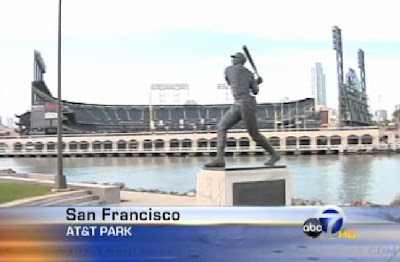
Watch video >
Watch video >
Subscribe to:
Posts (Atom)


